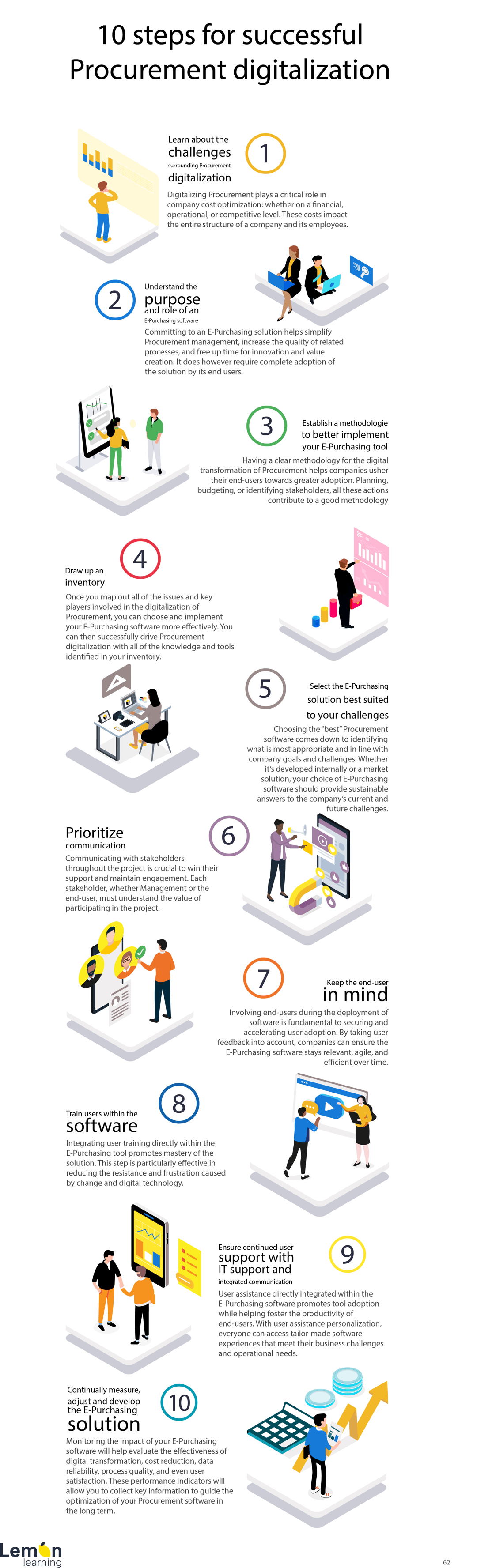
The digitization of purchasing: an essential strategy
Setting up a Purchasing information system (IS) is a crucial step in effectively digitizing your Purchasing function. But deploying the technology alone does not guarantee a successful digital transformation. A complete ROI assessment is what helps you optimize processes and sustain results over time.
ROI: a key indicator for evaluating the digitization of Purchasing
Measuring ROI means looking at both quantitative and qualitative indicators. In the context of the digitization of Purchasing, this lets you assess the real impact of your Purchasing IS and track the progress of your digital transformation against concrete goals.
Why measuring ROI matters
Clear performance indicators give you the data you need to optimize your Purchasing IS over time and align it with the evolving needs of your users. Without measurement, inefficiencies go undetected and investment decisions lack a solid foundation.
3 steps to evaluate ROI
Collect data - establish baselines before go-live and track key metrics consistently after deployment.
Analyze data - compare results against your predefined objectives and identify gaps or opportunities.
Optimize your Purchasing IS and user support - use findings to refine the system, update training, and improve adoption.
Key point: choose the right KPIs
Select KPIs that directly reflect whether your objectives have been achieved. Share results with your users alongside regular communication and open feedback channels. Feedback is essential for sustainable software adoption. Without it, user satisfaction scores are unreliable and the real needs of your end users go unaddressed.
Essential questions to evaluate and adjust your Purchasing IS
What aspects should be measured?
The effectiveness of the Purchasing IS implementation
Purchasing digitization performance
Adoption of the Purchasing IS
What indicators should you select to assess Purchasing performance?
Cost reduction
Data reliability
Process quality
How should you measure Purchasing IS adoption?
User mastery of the Purchasing IS
Reduction in support and training costs
User satisfaction scores
How do you collect the information?
Usage tracking tools
User questionnaires and feedback surveys
ROI analysis as a driver of successful Purchasing digitization
A structured ROI assessment, built on relevant KPIs and regular dialogue with users, is essential to optimizing your Purchasing IS and ensuring the long-term success of your digital transformation. By continually measuring and acting on performance data, you protect end-user satisfaction and keep your transformation on track. For a broader view of how to support users through change, the software ROI guide from Lemon Learning offers practical frameworks to help at every stage.
ROI from procurement digitization is measured by combining quantitative gains (cost reduction, lower labor costs, faster cycle times) with qualitative improvements (data reliability, process quality, user satisfaction). Tracking both types of indicators gives a complete picture of your Purchasing IS performance.
How do companies measure ROI from procurement software?+
Companies typically follow three steps: collect baseline and post-implementation data, analyze results against predefined KPIs, and use those findings to optimize both the software and user support. Common KPIs include cost savings, adoption rates, support ticket volume, and user satisfaction scores.
How can you forecast ROI before purchasing digital transformation software?+
Before deployment, map your current process costs and inefficiencies, define target KPIs, and model expected savings against total implementation costs (licensing, training, change management). Involving end users early in the process improves forecast accuracy and adoption.