Why You Can't Count on "Intuitive" Software to Drive Digital Adoption
Intuitive software design isn't enough to guarantee adoption. Discover the 4 reasons users avoid new tools and how a digital adoption platform can help.
As an IT project manager, solutions manager, or IT systems director, you have probably experienced the frustration of rolling out a new tool only to find that users quietly ignore it. You send reminders, you schedule training sessions, and still the adoption numbers disappoint.
The tempting explanation is that the software simply is not intuitive enough. But is that really the problem? And can you ever rely on intuitive software design alone to guarantee adoption?
Below are the real reasons your users avoid new tools and what you can do about it.
Digital Transformation: More Than a Question of Software
In recent years, digital transformation and software adoption have become central business priorities. Employees increasingly expect to access the tools and services they need whenever and wherever they choose.
You may have already invested in a new platform: ergonomic, well-designed, with a UX built around your team's needs. That is a great start. But the digital transformation challenge goes far beyond deploying tools. Above all, it is a change of mindset that touches every part of your organization.
Your employees are on the front lines of every new tool you introduce. Depending on their roles, experience, and comfort with technology, their openness to new software will vary widely. The result? Badly entered data, partially used features, or outright inactivity on tools you worked hard to implement. Understanding why this happens is the first step toward better adoption.
4 Reasons Users Avoid Your Tools
The motivation behind deploying a new collaborative platform, intranet, or purchasing tool is almost always well-intentioned: improve collaboration, simplify processes, manage workflows more effectively. Yet many employees still ask: "What do I gain from this?"
70% of change management projects fail, largely due to employee resistance. Fear of the unknown, no perceived value, tool fatigue, a lack of digital skills, or simply bad timing all contribute to users digging in their heels.
When employees do not see a clear reason to abandon familiar processes, they will not naturally gravitate toward something new, however well designed it may be.
Lack of Management Involvement
Leading by example is one of the most effective ways managers can encourage their teams to adopt new tools. Yet only 26% of employees believe their managers actually lead by example (RootInc).
Successful adoption requires buy-in at every level of the organization, starting with the people driving the change. When leadership is visibly engaged, the rest of the organization follows.
1 in 3 projects fails due to poor communication (Project Management Institute). Your employees are the end users of your internal tools, and they are the first to feel the impact when an application changes, a feature is added, or a process is updated.
Frequent communication alone is not enough. Users become more engaged when they receive the right message, at the right moment, delivered through the right channel. Push notifications, surveys, quizzes, and in-tool feedback loops all help maintain that connection.
Lack of Training
Even the best billing, ticketing, or project management software is ineffective if your teams do not know how to use it properly. Only 50% of employees and 64% of managers are satisfied with the materials available to learn new technologies (PwC).
While many enterprise software solutions include some form of technical support, very few offer a complete training program. Fewer still include interactive guides available directly within the user interface. The more comfortable users feel inside a tool, the more likely they are to use it fully and correctly.
The Solution: Re-engage Users From Inside Their Tools
Training is essential, but at what cost? SaaS applications update constantly, introducing new features, modules, and interfaces that demand ongoing learning. Traditional training programs struggle to keep pace and can disrupt employee productivity in the process.
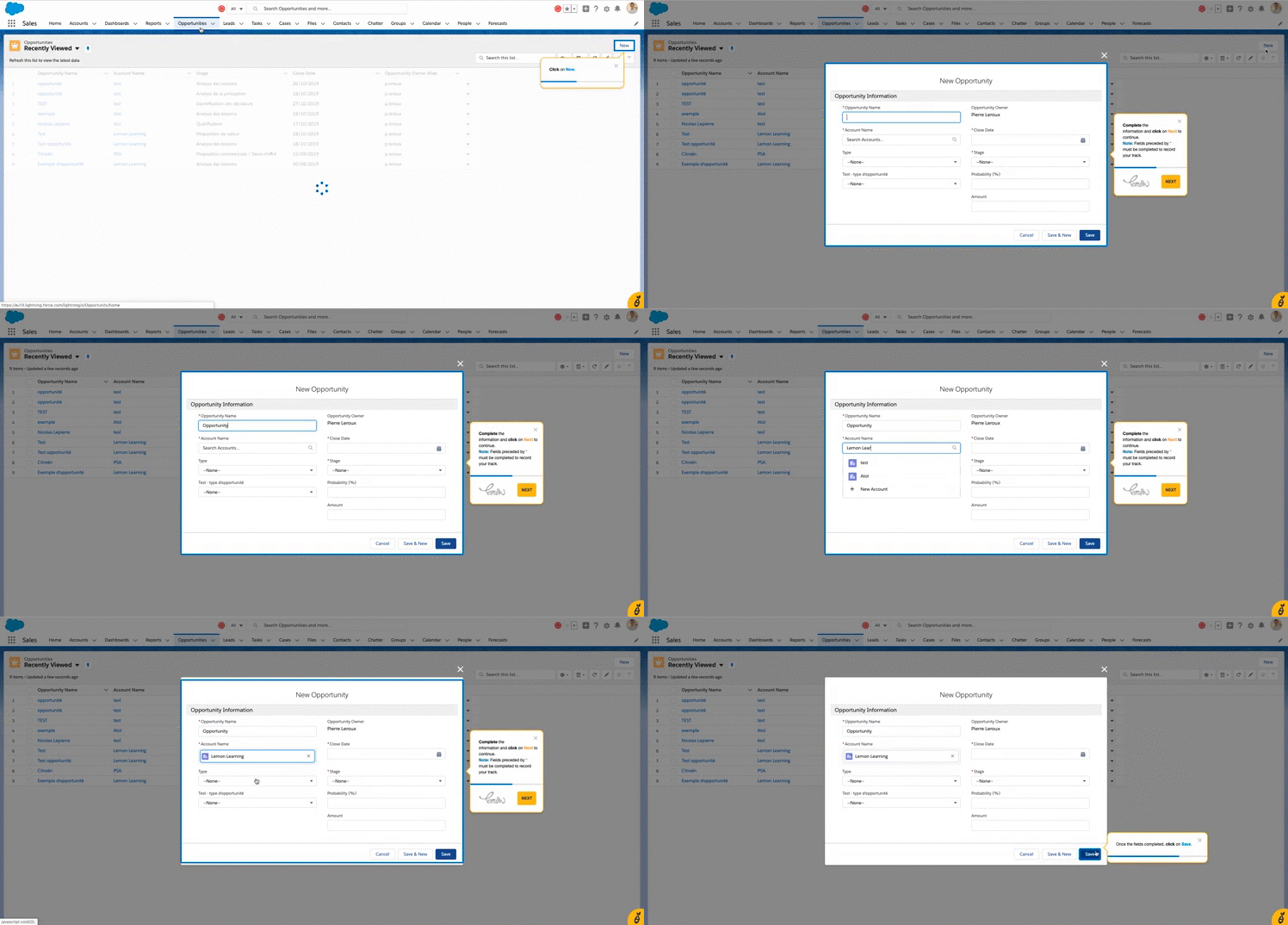
Digital adoption platforms (DAPs) solve this problem by embedding support directly inside your users' tools. Lemon Learning, for example, lets you create and update in-app guidance in just a few clicks, with no technical skills required. Training and support costs drop significantly, and employees can build skills without leaving their workflow.
Lemon Learning on Salesforce
Think of Lemon Learning as GPS navigation for your digital tools. Beyond interactive step-by-step guides, the platform provides real electronic performance support (ePSS) and keeps you in continuous contact with your users through push notifications, feedback prompts, and quizzes.
You simply cannot rely on intuitive software design alone. Whether you are rolling out a new CRM, onboarding employees onto an ERP, or expanding the use of a purchasing tool across your organization, lasting adoption requires the right combination of human resources, relevant training, good timing, and leadership that models the change you want to see.
Watch a demo
FAQ
Frequently asked questions
What does it mean for software to be intuitive?+
Intuitive software is designed so that users can navigate and complete tasks without needing instructions or training. In practice, however, what feels intuitive varies widely depending on a user's background, digital skills, and prior experience with similar tools.
What is digital adoption software?+
Digital adoption software, often called a digital adoption platform (DAP), sits as a layer on top of existing applications and provides in-app guidance, interactive walkthroughs, push notifications, and analytics to help users learn and use software effectively.
Why do employees resist new digital tools?+
Common reasons include fear of change, no clear perceived value, lack of training, poor communication from management, and a skills gap with the new technology. Even well-designed, ergonomic software can go unused without a structured adoption strategy.
Sales reps, SMBs, and startups all hit the same CRM adoption walls. Discover the real causes of low adoption, the hidden costs, and proven fixes that...