What if traditional training sessions are not actually training people effectively? Live, in-person training has long been the default for developing employee skills, but it is steadily losing ground to methods that are shorter, digital, and far more flexible.
Employee needs have evolved alongside the digital workplace. Tools multiply, skills become obsolete faster, and learners expect to access knowledge on their own terms. The real question is no longer whether in-person training will survive, but how organizations can combine the best of every format to make learning genuinely effective.
Organizational training has historically meant a specialist delivering content to a group of employees, live and in-person. The goal was straightforward: ensure employees are competent and operational in their roles.
Over time, that model evolved. Training managers and Chief Learning Officers entered the picture, followed by new formats: webinars, gamification, and virtual reality. What these approaches share is a learner-centered experience that is more interactive and less formal than the classic classroom session.
Will in-person training disappear?
Not entirely, but it must keep evolving. Employee expectations have shifted significantly. The rise of digital technology has introduced the concept of ATAWAD: Any Time, Anywhere, Any Device. Users expect to connect and learn from wherever they are, whenever it suits them.
That expectation is hard to meet with in-person sessions alone. In many organizations, classroom training is scheduled weeks or even months after a new employee starts, limited by room availability and trainer calendars. It lacks the flexibility that today's digital workflows demand.
Only 12% of employees actually apply the training they receive at work.
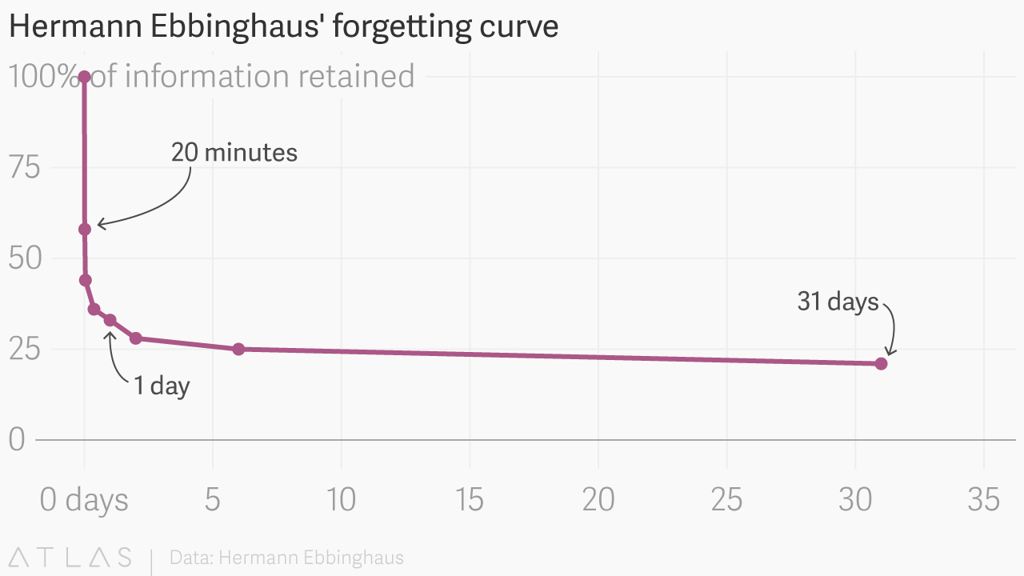
There is also the problem of information density. Heavy training sessions front-load content that is quickly forgotten once the session ends. Research into the Ebbinghaus forgetting curve shows that the human brain forgets between 50% and 80% of what it has absorbed within a single day if that knowledge is not repeated or applied. Separating theory from practice creates a gap that traditional training rarely closes.
From passive to active learners: engaging employees in their own training
Employees respond better to content that is short, engaging, and available in real time. Webinars, MOOCs, gamification, rapid learning, and e-learning all meet some of those requirements and support more autonomous learning habits.
Yet no single format is a perfect solution. Webinars require coordination, MOOCs offer little customization, and rapid learning has limited depth. The answer lies in combining formats intelligently rather than picking one.
Less is more.
Faced with the need for training that is shorter, more efficient, and more engaging, Lemon Learning offers more than just a training tool. Think of it as GPS navigation for learning: always available, right when and where it is needed. The approach is built on the Learning by Doing methodology.
Reading the highway code without ever sitting behind the wheel will not make you a driver. The Learning by Doing philosophy applies the same logic: theory without practice does little good. Lemon Learning sits directly inside the tools employees use every day, delivering on-demand micro-content without interrupting their workflow or productivity. This is especially valuable for deskless workers and teams who cannot attend scheduled classroom sessions.
From training to learning: in-person sessions are still part of the mix
Among all available formats, face-to-face training is not going away. It remains a significant need for both HR teams and employees: face-to-face training is still rated the most effective way to develop skills by 61% of employees and 60% of HR Directors. What is being questioned is not the in-person format itself, but its methods. Employees want more flexibility, more interactivity, and more personalization.
In-person training is dead. Long live in-person training!
The instinct to pit in-person training against digital adoption platforms like Lemon Learning misses the point. Increasingly, the two coexist and reinforce each other.
In a change management context, for example when introducing new software, in-person training that explains the "why" combined with practical on-the-job guidance delivers a far more complete skills development strategy. Blended learning, or mixed training, is growing in popularity precisely because it brings together the structure of traditional programs with the personalization of digital methods. For a deeper look at why this approach works, see why companies are choosing blended learning for corporate training.
A strong example of blended learning in practice is flipped learning. Rather than teaching theory in the classroom and leaving application to later, the session is dedicated to practical scenarios while learners explore concepts independently beforehand. Applied to digital adoption, Lemon Learning's in-app guides become a natural part of the in-person training experience rather than a separate layer.
The dynamic has fundamentally shifted. It is no longer a question of training, but of learning, and employees become active participants rather than passive recipients throughout the process.
"Transformation, compétences & learning", Baromètre International Cegos 2018.
FAQ
Frequently asked questions
What is the blended approach to training?+
Blended learning combines traditional in-person sessions with digital methods such as e-learning, microlearning, and on-the-job guidance tools. The goal is to give learners more flexibility, interactivity, and personalization than any single format can offer alone.
Why is blended learning better than in-person training alone?+
In-person training is effective for building skills, but it has real limits: scheduling constraints, information overload, and the forgetting curve. Blended learning reinforces theory with repeated, practical application so knowledge actually sticks.
What are the negatives of blended learning?+
Common challenges include the need to coordinate multiple formats, ensuring consistent quality across digital and in-person content, and supporting employees who have limited digital access or lower digital confidence.