CRM adoption is the degree to which users actively use and gain measurable value from a CRM (Customer Relationship Management) system, not just whether the software has been installed. If your teams are logging in but not entering data, not following standard processes, or reverting to spreadsheets, you have a CRM adoption problem. A DAP (Digital Adoption Platform) addresses each of those failure points directly, inside the CRM itself.
CRM adoption issues and challenges share common roots. Users find the system harder to work in than their existing habits. Training happens once, away from the tool, and is quickly forgotten. Data entry feels like extra work with no immediate personal benefit. And managers lack visibility into where adoption is breaking down.
The fix is not more classroom training. It is making the CRM the easiest place to do the work, with guidance embedded where users already are.
"You can run the most interesting project in the world, but if there is no support for users, adoption will be very limited. So you need tools that let people build skills on these new tools easily and intuitively."
1. How Does In-App Training Improve CRM User Adoption?
In-application training is the single most effective method for improving CRM usage adoption. Because a digital adoption platform integrates directly with your CRM as an overlay layer, users train and work at the same time, inside the same interface.
Training is delivered through interactive content guides broken into micro-objectives of 30 seconds to three minutes. This approach supports attention management rather than block scheduling, allowing users to build competency at their own pace without leaving the CRM.
Role-based contextual content means that salespeople, marketers, and customer success teams each see guidance relevant to their specific workflows, whether that is setting up an automation sequence, exporting a pipeline report, or resolving a service ticket.
In-app training with a DAP allows users to:
Onboard independently from day one with no separate training environment
Revisit step-by-step guides on demand, reducing reliance on support tickets
2. How Does In-App Communication Support CRM Adoption Best Practices?
CRM adoption does not end at go-live. Product updates, process changes, new feature rollouts, and compliance reminders all require ongoing communication. A digital adoption platform delivers that communication inside the CRM, at the moment it is relevant, rather than through email inboxes that users ignore.
Two features drive this:
Push Notifications
Scheduled pop-up notifications can be targeted by user role, department, or behavioral trigger. Ready-to-use templates reduce the time needed to deploy announcements across the organization.
Tooltips
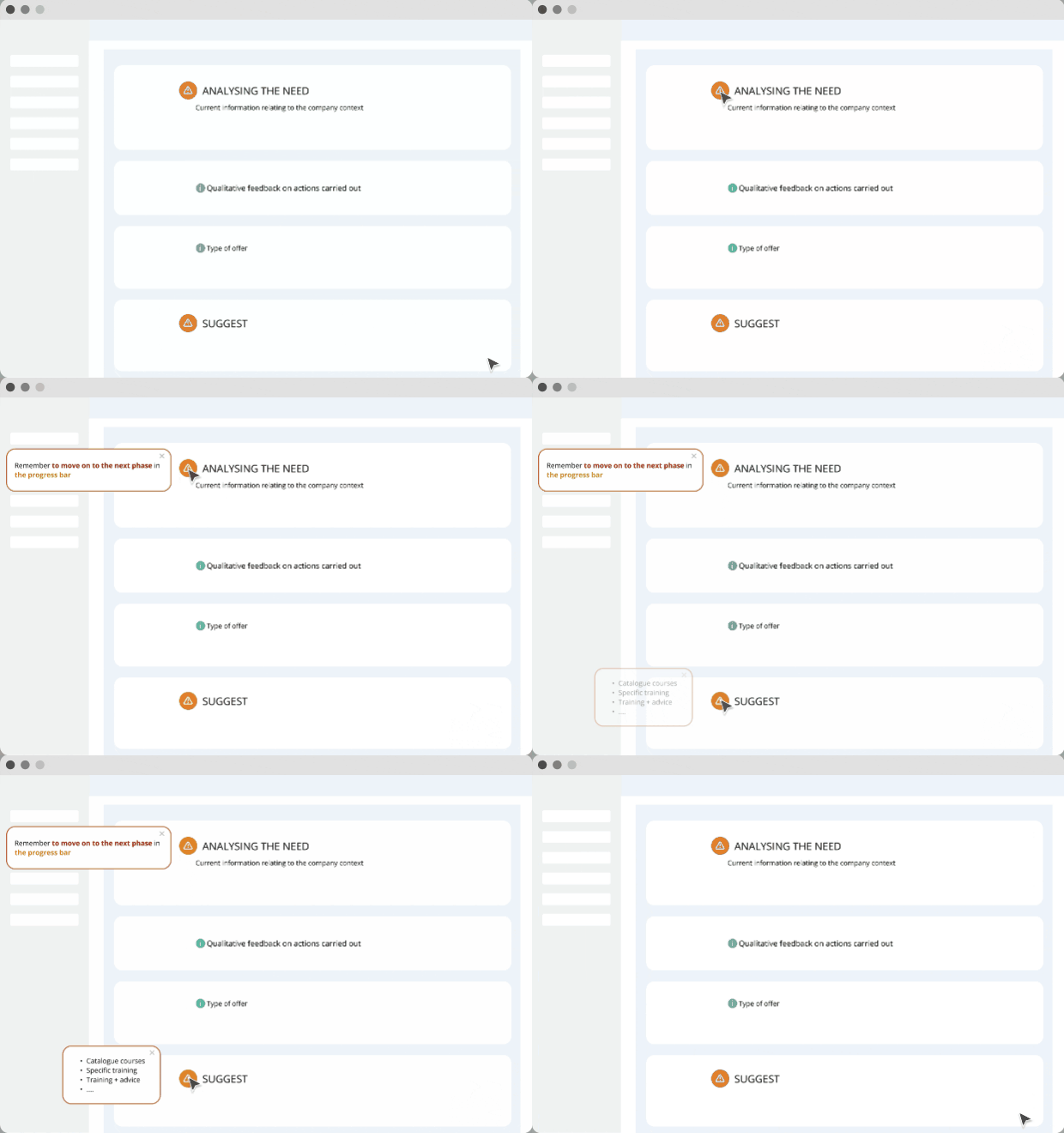
Tooltips appear on any page, field, or button inside the CRM according to user profile or task context. They surface the right guidance without interrupting the workflow, which is especially useful for remote and distributed teams where help-desk access is limited.
Working from an inbox email sidebar inside the CRM is another context where tooltips reduce friction: users receive guidance exactly where they are entering contact or deal data, without switching screens.
3. How Does a DAP Improve CRM Data Quality?
Poor data quality is one of the most damaging CRM adoption issues. If the records coming into the system are incomplete or inconsistent, reports and forecasts become unreliable, which in turn reduces user trust in the CRM and discourages further adoption.
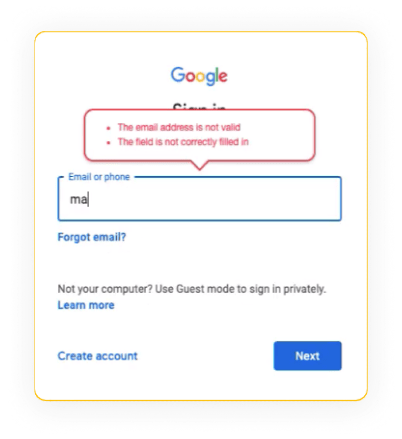
A digital adoption platform addresses this at the point of entry with a data checker feature that flags errors in real time, before bad data reaches the database.
Data Checker Feature
Additional data management capabilities include:
A library of interactive guides that standardize data-entry processes across sales, marketing, and customer success teams
24/7 in-application support so users can resolve uncertainty without waiting for a colleague or raising a ticket
Real-time error prompts that reduce the cost of downstream data cleansing
4. How to Monitor and Boost CRM Adoption Across the Organization
Fixing low CRM adoption in an organization requires visibility. Without usage data, training improvements are guesswork. A digital adoption platform provides the analytics layer that CRM platforms alone do not offer: you can see which workflows users complete, where they drop off, and which teams need additional support.
This is particularly useful for organizations running Microsoft Dynamics 365, where monitoring user adoption across business units requires granular behavioral data beyond what the platform natively surfaces.
Key capabilities for measuring and improving adoption include:
Adaptive training workflows that update based on user performance data
Always-on in-application support that reduces adoption drop-off between training cycles
For organizations supporting home-grown or heavily customized CRM environments, a DAP is especially valuable because it works as an overlay on any web-based interface, not just out-of-the-box platforms.
5. How Does a DAP Reduce CRM Training Costs and Improve Software ROI?
CRM adoption solutions that rely on periodic instructor-led training scale poorly. Every new hire, every product update, and every process change generates a training event with its own scheduling and delivery cost. A digital adoption platform breaks that cycle.
Because content is built once and deployed inside the CRM without code, training updates take minutes rather than days. Startups and fast-scaling teams benefit most: time-to-value is compressed from weeks to days because users can self-serve from day one.
Lower data remediation costs through real-time error prevention
Reduced IT and help-desk support costs through 24/7 self-serve guidance
Lemon Learning works as a CRM adoption and training solution on top of Salesforce, Oracle, and Microsoft Dynamics 365, as well as custom-built and home-grown CRM systems. Explore the sales operations adoption solution to see how these capabilities combine, or request a demo to see a DAP in action inside your CRM environment.
FAQ
Frequently asked questions
What is CRM adoption?+
CRM (Customer Relationship Management) adoption is the degree to which a company's teams actively use and extract value from their CRM system. It goes beyond simply installing the software: it measures whether users log in consistently, enter accurate data, and complete the workflows the business depends on for sales, marketing, and customer service.
What is the adoption rate of CRM?+
According to Forrester research, CRM is broadly deployed: roughly 70% of organizations have adopted CRM for customer service and 64% for B2B marketing. However, deployment does not equal active use. Many organizations report low satisfaction and incomplete utilization even after rollout, which is why a deliberate adoption strategy matters.
What are the 4 types of CRM?+
The four main types of CRM are: (1) Operational CRM, which automates sales, marketing, and service processes; (2) Analytical CRM, which mines customer data to support decision-making; (3) Collaborative CRM, which shares customer information across departments and partners; and (4) Strategic CRM, which focuses on long-term customer relationship development to build competitive advantage.
How to increase CRM adoption?+
The most effective ways to increase CRM adoption include: embedding training directly inside the CRM so users learn while they work; using in-app notifications and tooltips to communicate updates; deploying a data checker to reduce entry errors; monitoring adoption with learning analytics; and reducing time-to-value with contextual, role-based guidance. A digital adoption platform (DAP) combines all of these capabilities in one layer on top of your existing CRM.
Sales reps, SMBs, and startups all hit the same CRM adoption walls. Discover the real causes of low adoption, the hidden costs, and proven fixes that...