Popularity of the SaaS subscription model continues to grow exponentially, providing companies with easy-to-install and deploy solutions. The pay-as-you-go model means organisations of all sizes can subscribe, scale, or adapt their SaaS tech stack in line with their individual business needs. But this abundance of new technology has also created a steeper learning curve for employees.
And that's where digital adoption platforms come in. Implementing a DAP has been proven to increase the time to value of employees, accelerate employee onboarding, facilitate employee training, and boost employee productivity. In a nutshell, DAPs can sustainably increase employee digital adoption and increase the ROI of SaaS tools.
But with so many platforms on offer, the real challenge is selecting the right DAP for your business. WalkMe has long been considered a market leader in the digital adoption platform space, but in 2025, it was acquired by SAP for approximately $1.5 billion. While it continues to serve non-SAP environments, its strategic direction is increasingly tied to the SAP ecosystem, which is a factor worth considering when evaluating it as a long-term platform.
To help you decide, we created a comparative list of features and benefits you should be looking for in your DAP, using 4 great WalkMe alternatives you should consider in 2026.
TL;DR
WalkMe is an enterprise-scale DAP with extensive features and customisation options, now part of SAP. It may not be the best fit for every company due to expensive pricing, complex UX, technical integration requirements, a steep learning curve, and costly support.
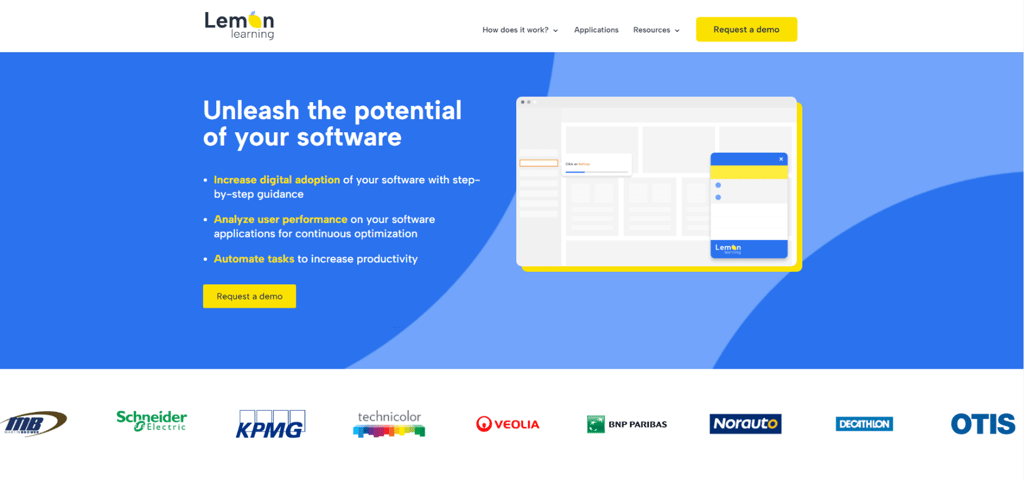
Lemon Learning is a European DAP alternative to WalkMe with an easier-to-use UX, unlimited local support, and transparent pricing. Lemon Learning offers: ➡️ Unlimited local support, a no-code editor, AI-powered guidance, and advanced user analytics. ➡️ Compatibility with all SaaS applications and third-party onboarding solutions. ➡️ Two pricing options: per tool licence and corporate licence. Lemon Learning vs WalkMe: Lemon Learning is more affordable, has an easier-to-use UX, includes unlimited local support, and requires no technical knowledge for set-up. Both offer no-code content creation and in-app messaging.
For organisations evaluating both platforms, our Lemon Learning vs WalkMe comparison provides a detailed breakdown of features, pricing, support, and deployment requirements.
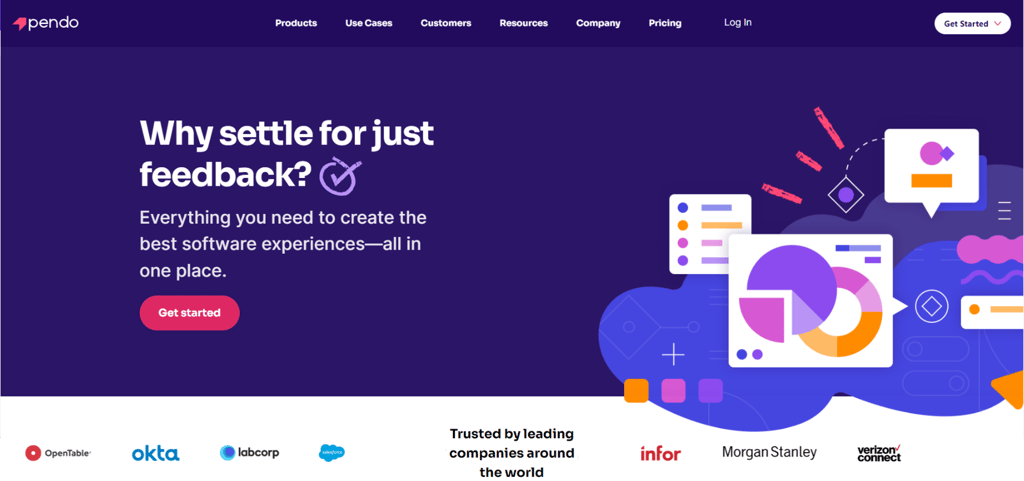
Pendo is a product experience platform with user behaviour analytics and AI-powered insights, best suited to SaaS product teams. Pendo offers: ➡️ Tools for user segmentation, behaviour analysis, and identifying areas for development. Can be installed quickly and includes AI-driven predictive analytics. ➡️ An ideal solution for product managers looking for analytics and feedback, while WalkMe is better for in-app guidance and onboarding. ➡️ A free tier for up to 500 monthly active users, with paid tiers scaling from there.
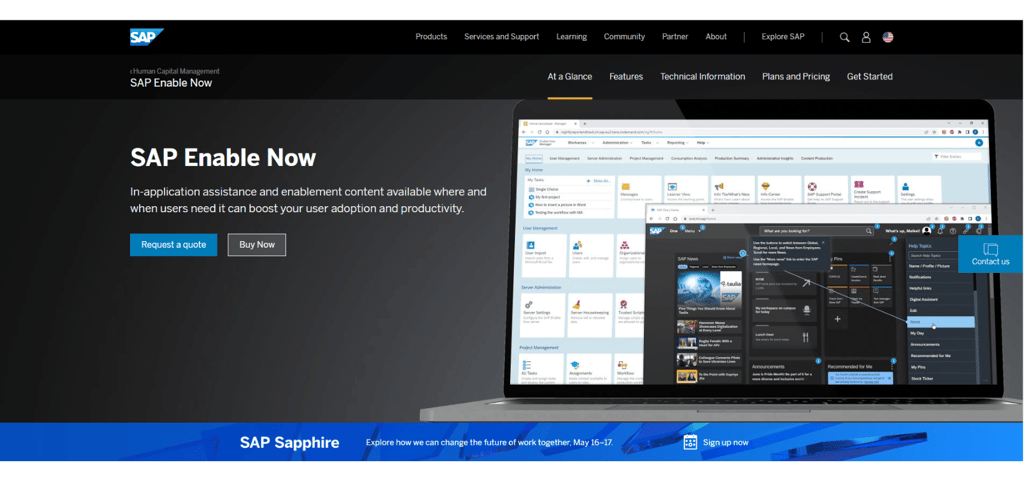
SAP Enable Now provides advanced reporting and analytics for SAP environments. SAP Enable Now offers: ➡️ Context-sensitive guidance and integrations with other SAP and non-SAP solutions. ➡️ A solution designed for large enterprises using SAP software, with mobile training and multi-language support. Note: as WalkMe is now also part of SAP, buyers heavily invested in SAP should evaluate both tools together.
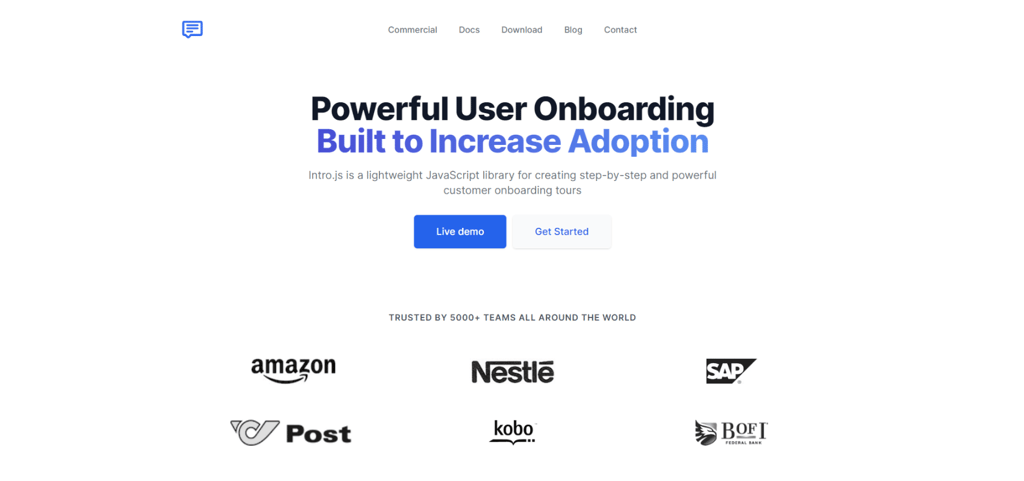
Intro.js is a budget-friendly alternative to WalkMe for developers with technical knowledge of JavaScript and CSS, with customisable styles and step-by-step guides. Intro.js offers: ➡️ A solution best suited to developers in smaller enterprises, while WalkMe is better for professionals in need of digital adoption analytics and large enterprises.
What does WalkMe do?
WalkMe is a cloud-based digital adoption platform that enables companies to onboard and train both employees and customers on in-house or third-party applications. Like most digital adoption platforms, WalkMe helps managers, including product managers and customer success managers, create in-application content workflows to effectively measure the performance of their users.
Founded in 2011, WalkMe became one of the most recognised names in digital adoption, known for its extensive range of features, functionalities, and customisation options. In 2025, WalkMe was acquired by SAP for approximately $1.5 billion and has since been integrated into several core SAP products including SuccessFactors, Ariba, Concur, and SAP Sales and Service Cloud. The platform continues to support non-SAP applications, but its strategic roadmap is increasingly aligned with the SAP ecosystem.
The WalkMe platform is a strong option for internal application training on leading market software (e.g., Oracle, Salesforce, and SAP), and is used by global enterprises including IBM, PwC, and Adobe.
But does this make WalkMe the right fit for your organisation? An expensive enterprise platform with a shifting strategic direction is not necessarily the best option for every company, and we are going to break down some reasons why.
5 reasons to choose a WalkMe alternative
Expensive pricing model
WalkMe's pricing is not publicly available and is customised based on organisation size, application coverage, and deployment type. Third-party transaction data from Vendr estimates the average WalkMe contract value at approximately $78,817 per year, positioning it primarily for larger enterprise deployments. The digital learning product is sold separately, adding further cost. For scaling companies or those with limited IT budgets, this may be unsuitable.
Unfriendly UX
A digital adoption platform should facilitate instant software adoption, in part through good UX and UI. WalkMe has received mixed responses regarding its user experience.
👍 WalkMe Pros
👎 WalkMe Cons
"A powerful tool with an amazing team behind it!" In-app help and walkthroughs are helping to cut support requests, and WalkMe enables us to tackle user issues quickly. We also use WalkMe to plug gaps in UX whilst waiting for in-app fixes to be completed by the development team.
"It's feature rich, but bloated." Pre-built templates are messy, have a poor UX to edit elements, and most areas need CSS knowledge to be truly powerful.
Technical and lengthy configuration
Depending on the specific requirements and complexity of a project, it can take WalkMe anywhere from days to several weeks to fully integrate and customise a platform. This is a result of WalkMe's particularly technical integration requirements. In comparison to WalkMe alternatives such as Lemon Learning, where a simple plugin or JavaScript code is required for deployment, WalkMe may not be the best fit for organisations moving at a fast pace.
Steep learning curve
Reviews also reveal a steep learning curve during implementation that requires technical knowledge. WalkMe does provide an abundance of learning resources during set-up, including their LMS university. But the resources can be overwhelming, and the LMS itself does not feature WalkMe technology. If you are looking for simplicity, it might not be the right option for you.
Expensive support
WalkMe provides a range of learning resources but does not provide free support services. Assistance from WalkMe support teams will quickly escalate costs during implementation and ongoing maintenance. You may also need to consider the need for dedicated internal resource in your WalkMe project — understandable in larger companies with high-functioning IT departments, but less feasible for mid-market organisations.
What WalkMe's acquisition by SAP means for buyers
In 2025, SAP acquired WalkMe for approximately $1.5 billion — one of the largest transactions in the digital adoption space to date. Both companies publicly committed to supporting non-SAP customers, and WalkMe's support teams were said to remain unchanged. On paper, the reassurances are there.
But for any organisation currently evaluating or renewing a WalkMe contract, three questions are worth asking.
Will the product continue to be developed for non-SAP environments, or will investment increasingly flow toward SAP-native use cases? WalkMe says both, but its roadmap tells a clearer story. WalkMe is now a core pillar of SAP's "Joule everywhere" AI strategy, deeply embedded into SuccessFactors, Ariba, Concur, and S/4HANA, with full ERP cloud integration completed in late 2025 and a broader migration of the two solutions scheduled for 2026/2027.
What happens to pricing, contract terms, and support structures under new ownership? Officially, nothing has changed. In practice, SAP is already moving toward bundling WalkMe with S/4HANA transformations and offering it as a freemium tier within its own application suite, which raises a legitimate question about what standalone pricing looks like for non-SAP customers over the long term.
And critically, who do you call when something goes wrong? WalkMe, or SAP? On this one, there is no clear public answer.
For organisations that chose WalkMe precisely because it was an independent, best-in-class DAP, the calculus has changed. The reassurances may be genuine today. But a platform whose roadmap is increasingly defined by a parent company's enterprise software priorities is a different proposition to the one many customers originally signed.
Lemon Learning offers a stable, independently operated alternative — European-sovereign, GDPR-compliant, with transparent pricing and a support model that answers directly to you, not to a wider corporate agenda.
WalkMe Pros and Cons
👍 WalkMe Pros
👎 WalkMe Cons
Extensive software features and customisation options
Steep learning curve and complex UX
Enterprise scale platform trusted by global brands
Not the best fit for mid-market or smaller organisations
Customisable plans with access to advanced features
Using a comparative breakdown of 4 WalkMe alternatives, we are going to highlight features, functionalities, reviews, and pricing to help you make the right decision.
WalkMe Alternative #1 Lemon Learning
Lemon Learning is a leading European digital adoption platform referenced in the Gartner Market Guide for Digital Adoption Platforms (September 2025), designed to be simple to deploy, fully supported, and affordable. Organisations deploy Lemon Learning to accelerate employee onboarding, support change management, and ensure the sustainable adoption of business applications, from CRM and ERP to intranets and custom tools.
Easy integration: The all-in-one platform is easy to integrate via JavaScript code or browser extension, and features a no-code editor for content creation that requires no technical skills or extended support from IT departments. New admins are typically onboarded to the editor in approximately 3 hours.
Unlimited local support: Unlike WalkMe, Lemon Learning provides unlimited local support included in the licence fee. Whether it's implementation, content creation, training, or maintenance, organisations benefit from a dedicated project manager, pedagogical engineer, and technical manager, as well as regular follow-up workshops.
Easy to use: Unlike many other WalkMe alternatives, Lemon Learning is known for its simplicity and easy-to-use UX. Lemon Learning users can expect immediate adoption and autonomy over their tools.
AI-powered guidance: Lemon Learning's AI Assistant instantly resolves user queries and suggests or launches guides automatically. Admins can also generate contextual in-app guides from a simple text prompt using AI guide creation, significantly reducing content production time.
Lemon Governance: A unique capability that goes beyond onboarding. Lemon Governance enables IT and business leaders to monitor software usage across tools, prevent Shadow IT, manage content at scale, and maintain adoption over time.
Your ROI with Lemon Learning
Training
75%
less face-to-face training
thanks to interactive guides available on-demand, inside your tools
Support
50%
less support costs on average
thanks to step-by-step guidance integrated within your production tools
Content creation
80%
time saving in content creation
thanks to the AI Content Creator and intuitive no-code authoring tool
Just like WalkMe, Lemon Learning is compatible with all SaaS applications, including in-house solutions and third-party enterprise applications such as Salesforce, Microsoft 365, SAP, and Oracle.
Features & functionalities ⚙️
In-app interactive walkthroughs, tooltips, and step-by-step guides
AI Assistant — instantly resolves user queries and suggests or launches guides automatically
AI guide creation — generate contextual in-app guides from a simple prompt
Supported content creation with a dedicated project manager, pedagogical engineer, and technical manager
Push notifications — targeted by audience, date, and frequency
User segmentation — assign relevant content by profile, role, or tag
Player personalisation — adapt the interface to your brand identity
Lemon Governance — Shadow IT prevention, usage monitoring, and content management across tools
Advanced user analytics with adoption tracking, licence optimisation, and friction identification
Automated translation with manual and AI-assisted options (35+ languages)
Import existing LMS/SCORM content
Ready-to-use guides for leading market solutions (Salesforce, Microsoft 365, SAP, and more)
EU data sovereignty and GDPR compliance
Support including project governance, workshops, and on-site support
Lemon Learning reviews ⭐
👍 Lemon Learning Pros
👎 Lemon Learning Cons
"Perfect to support users" Ease of handling, whether for administrators or end users. The "Wow" effect is assured and users are delighted to be accompanied step by step.
"Better communication between teams" We were missing a feature to edit the guide exactly as we wanted. But the teams were very responsive and created it for us in 24 hours, thank you.
Pendo is a highly effective solution for product teams seeking a deeper understanding of their users' behaviour. Unlike WalkMe, Pendo is a product experience platform specifically designed to measure user performance and provide valuable insights that inform product development decisions. Where most DAPs lead with guidance and add analytics, Pendo leads with data — making it a stronger fit for product and customer success teams than for IT-led enterprise rollouts.
Quick integration: Like Lemon Learning, Pendo installation can be carried out without coding knowledge. The installation process is efficient and can take between 10–30 minutes, though some technical knowledge is required for full configuration.
AI-powered insights: Pendo has expanded its AI capabilities significantly. Pendo Predict identifies churn and expansion signals from usage data, while Agent Analytics provides visibility into how users interact with AI copilots and assistants — a forward-looking capability for teams managing AI tool rollouts.
In-depth analytics: Like WalkMe, Pendo has extensive analytics features including session replays, user segmentation, and retroactive data capture. The analytics layer can also be integrated with tools such as Salesforce and Mixpanel for additional insights.
Both WalkMe and Pendo offer mobile solutions. If you are in search of comprehensive product analytics and a feedback solution, Pendo is a great WalkMe alternative. If you want to focus primarily on in-app guidance and employee onboarding, WalkMe or Lemon Learning may be a better fit.
Features & functionalities ⚙️
In-app guidance using walkthroughs, tooltips, and checklists
Deep product analytics with retroactive data capture and segmented reporting
Session replay for qualitative behaviour analysis
User feedback collection including NPS, polls, and surveys
Pendo Predict — AI-powered predictive churn and expansion scoring
Agent Analytics — visibility into how users engage with AI copilots
A/B testing to optimise feature adoption and user experience
Integration with tools such as Salesforce and Mixpanel
User segmentation for targeted communications
AI-generated guides and content with automated personalisation at scale
Pendo reviews ⭐
👍 Pendo Pros
👎 Pendo Cons
"Fantastic tool to track product usage and experience" The best feature about Pendo has been the constant collection of user clicks without the need to set up trackers via code. This enables us to tag usage directly from the tool and start monitoring historic data without involving development teams.
"Good technology but difficult to get the support you need." The caveat is that you can only get meaningful insights into your app usage if you set it up properly. We have found it difficult to get the support we need and get our questions answered.
Pricing 🪙
Pendo offers a free tier for up to 500 monthly active users, with paid tiers scaling significantly for larger user bases. Contact Pendo to learn about their pricing options.
Free (up to 500 MAUs)
Growth
Portfolio
Premium
Pendo vs WalkMe ✅
Pendo
WalkMe
Best option for product managers and SaaS teams focused on user behaviour analytics
Best for enterprise professionals in need of digital adoption and workflow automation
Primarily designed to improve customer and product experience
Designed to improve employee and customer software adoption
A/B testing capabilities (in-app messaging, features, guides, user segments)
A/B testing capabilities (guides, onboarding workflows, user segments)
In-depth analytics focused on user behaviour — session replays, retroactive data, AI-powered predictive scoring
In-depth analytics focused on adoption — usage tracking, flow analytics, real-time data
Free tier available for up to 500 MAUs
No free tier; pricing starts at enterprise contract level
Integration with Salesforce, Mixpanel, and other analytics tools
Integration with Salesforce, Google Analytics, and others
User-friendly UX
Complex and technical UX
Real-time data on user behaviour and engagement
Real-time data on user behaviour and engagement
WalkMe Alternative #3 SAP Enable Now
SAP Enable Now allows companies to create, manage, and deliver digital adoption and training content for their employees, customers, and partners. It makes a strong WalkMe alternative if your organisation is heavily focused on internal training on SAP suite solutions and requires a structured, enterprise-grade learning environment.
Important context for 2026: With WalkMe now also part of SAP, organisations already running SAP environments should evaluate both SAP Enable Now and WalkMe together as complementary or overlapping tools, rather than direct alternatives. The two products serve different use cases within the SAP ecosystem — Enable Now focuses on structured e-learning and content management, while WalkMe focuses on in-app, real-time guidance.
Context-sensitive guidance: Both WalkMe and SAP Enable Now offer on-demand guidance and process support. SAP Enable Now provides context-sensitive guidance directly within the application, while WalkMe focuses on interactive walkthroughs and tooltips.
Wide range of integrations: SAP Enable Now integrates with other SAP and non-SAP solutions such as SuccessFactors, as well as external systems including SharePoint and LMS platforms — a good fit for organisations already embedded in the SAP ecosystem.
Advanced reporting and analytics: SAP Enable Now has strong reporting and analytics capabilities to track and measure the effectiveness of digital adoption and training programmes, including completion rates, knowledge checks, and learning impact.
Features & functionalities ⚙️
Context-sensitive on-demand guidance and process support with step-by-step instructions directly within the application
Authoring and management tools to create, manage, and deliver digital adoption and training content
Advanced reporting and analytics to track and measure training effectiveness
Library of predefined best practices, process templates, and content
Interactive simulations, videos, and quizzes
External partner and customer onboarding and training
Integration with SAP and non-SAP solutions including SuccessFactors, SharePoint, and LMS platforms
Mobile training and support accessible online and offline
Multi-language support
SAP Enable Now reviews ⭐
👍 SAP Enable Now Pros
👎 SAP Enable Now Cons
"Great for e-learning content" Creating and managing e-learning content is simple and very intuitive. One of the best features is the reuse of content in several training scenarios.
"Great for e-learning content" The only downside is the price of the licences. It's quite high. We haven't been able to licence all of our people.
Pricing 🪙
SAP Enable Now pricing is available upon request and varies based on organisation size and deployment requirements. Contact SAP directly for a personalised quote.
Custom pricing — contact SAP for a quote
SAP Enable Now vs WalkMe ✅
SAP Enable Now
WalkMe (now part of SAP)
Structured e-learning and training content management
Real-time in-app guidance and workflow automation
Best suited to large enterprises running SAP software
Best suited to large enterprises; increasingly SAP-focused post-acquisition
Employee onboarding and training — strong focus on SAP suite
Onboards and trains both employees and customers on in-house and third-party applications
Mobile training and support accessible online and offline
Mobile training and support accessible online and offline
Structured, content-driven UX suited to formal training programmes
Steep learning curve and complex UX for non-technical users
Multi-language support
Multi-language support
No-code editor for in-house content creation
No-code editor for in-house content creation
Expensive pricing
Expensive pricing; average contract ~$78,817/year (Vendr)
Advanced reporting on training completion and learning impact
Adoption analytics, flow analytics, and real-time usage data
WalkMe Alternative #4 Intro.js
Intro.js is a JavaScript user onboarding and product walkthrough library used to create interactive product tours. It is an excellent WalkMe alternative for startups and smaller companies with a limited budget, and even offers a free version for personal projects.
However, Intro.js is primarily designed for developers with technical knowledge including JavaScript, CSS, and GitHub. Developers can use this DIY option to create step-by-step guides across website pages and mobile applications. It is not a no-code tool and requires ongoing developer resource to build and maintain.
Step-by-step guides: The library allows developers to create step-by-step guides that walk users through processes, specific elements on a page, and provide contextual explanations.
Features & functionalities ⚙️
Step-by-step guides: Create guides that walk users through processes, specific page elements, and provide explanations.
Tooltips: Intro.js uses tooltips to display explanations for each step of a guide. Developers can customise the appearance and behaviour of tooltips by changing colours, position, and text.
Event callbacks: Provides event callbacks that developers can use to trigger custom behaviour when certain events occur, such as when a user moves to the next step.
Customisable styles: Uses CSS to style the guide, meaning developers can customise the appearance to match the look and feel of their website or web application.
Mobile support: Designed to work on both desktop and mobile devices, though additional development work may be required to ensure a consistent mobile experience.
Multi-language support: Supports multiple languages for guides created in different markets.
Intro.js reviews ⭐
Intro.js is an open-source library with limited formal reviews on G2 or Capterra. Community feedback and usage examples are available via GitHub, where the project has accumulated significant community engagement. It is best evaluated by developers directly testing the library against their specific use case.
Pricing 🪙
Intro.js is the most affordable WalkMe alternative on this list, with 4 different options.
Free (open source, for non-commercial personal projects)
Starter: $9.99 (excluding support)
Business: $49.99 (1 month of official support and code review)
Premium: $299.99 (1 year of official support, code review, and unlimited projects)
Intro.js vs WalkMe ✅
Intro.js
WalkMe
Best option for developers in smaller enterprises or startups
Best suited to large enterprise professionals in need of digital adoption and workflow analytics
Best suited to startups and smaller enterprises
Best suited to large enterprises
Requires developer resource (JavaScript and CSS knowledge) to build and maintain
No-code editor available, though complex customisation still requires technical knowledge
Exclusively guides users through in-house or third-party web applications
Onboards and trains both employees and customers on in-house or third-party applications
Free and highly affordable pricing options
Expensive pricing; average contract ~$78,817/year (Vendr)
Fully customisable styles via CSS library
Basic colour and design options without developer involvement
No analytics or adoption tracking
Full adoption analytics, flow tracking, and real-time usage data
Not all digital adoption platforms are built the same. The right one depends on your tools, your teams, and the outcomes you need to drive. If you'd like to see how Lemon Learning fits into your oragnisation, book a demo on a software of your choice.