Microsoft Dynamics 365: the CRM integrated with Microsoft 365
Optimize Dynamics 365 adoption with embedded training
Oracle CRM vs Salesforce: a direct comparison
Choosing the right CRM (Customer Relationship Management) system is one of the most consequential software decisions a business can make. The short answer: the best CRM is the one that most closely matches your team's workflows, your budget, and your short- and long-term sales goals. The three platforms that dominate enterprise discussions are Salesforce, Oracle CX Cloud, and Microsoft Dynamics 365. This guide compares all three and explains how to evaluate them against your own criteria. For a deeper look at what happens after you pick a platform, see our guide to successful CRM implementation.
What does CRM stand for, and what is it used for?
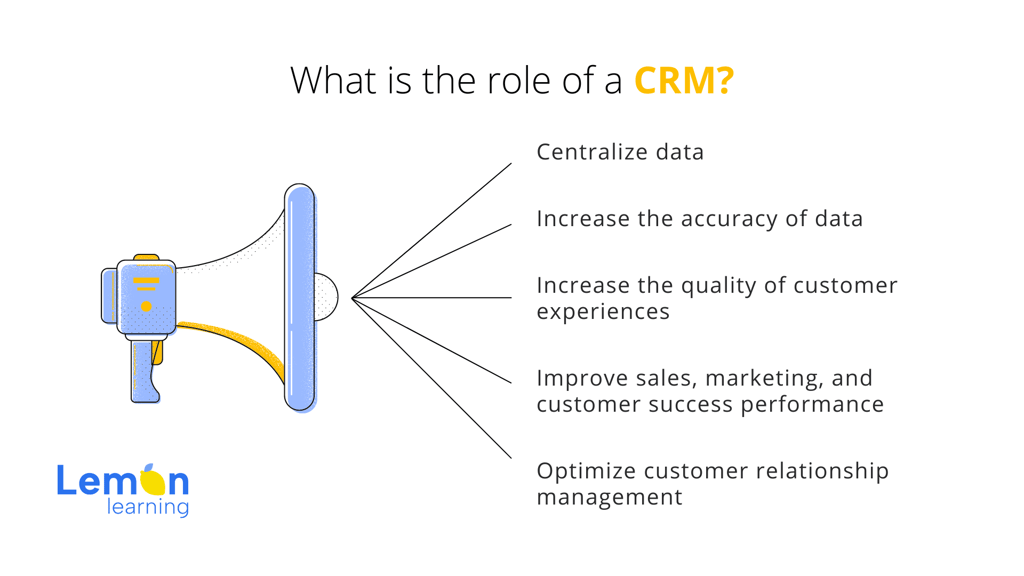
CRM stands for Customer Relationship Management. A CRM system is a software platform that centralizes all data and interactions related to prospects and customers, giving sales, marketing, and service teams a shared, unified view of every relationship. Core functions include:
Centralized data management: prospect records, customer history, marketing campaign results, and analytics in one place, enabling better monitoring of the full sales cycle.
Personalization at scale: features that help tailor marketing campaigns and sales outreach based on individual customer data.
Customer experience visibility: a complete timeline of every interaction so teams can respond faster and more accurately.
Task automation: elimination of repetitive manual work so sales and marketing teams focus on higher-value activity.
Analytics and forecasting: built-in reporting tools that support long-term relationship and revenue planning.
Realizing these benefits, however, depends entirely on selecting the right platform and ensuring that users actually adopt it. That second point is where many CRM projects fall short.
"The key to digital success is data, and to capture it someone has to enter it. It is not the executive committee that enters the data, it is the end user; if they enter it well, then we can use it."
Alexis de Nervaux, CDIO, Icade, on the Lemon Learning CIO Pioneers podcast
How do you choose the right CRM?
There is no universally perfect CRM. Every organization faces its own mix of sales complexity, team size, integration requirements, and budget constraints. The right framework is to define your selection criteria first, then evaluate platforms against them.
Ask these questions before you begin comparing vendors:
What is your total budget for licensing, implementation, customization, and ongoing training?
What are your short- and long-term business challenges for sales and marketing teams?
Which features are non-negotiable versus nice-to-have?
How many users will need access, and across which departments?
What other systems must the CRM integrate with (ERP, marketing automation, support desk)?
How much in-house IT resource can you dedicate to deployment and maintenance?
Once you have clear answers, use them to score each platform. Our guide to CRM evaluation criteria provides a detailed checklist to structure that process.
The three SaaS CRM platforms most commonly shortlisted by mid-market and enterprise organizations are Salesforce, Oracle CX Cloud, and Microsoft Dynamics 365. Here is how each one positions itself.
Salesforce: the leading cloud CRM
Salesforce is the global market leader in SaaS CRM. Its platform is built around a 360-degree view of the customer and is notable for its breadth of integrations, a large independent software vendor ecosystem, and a strong community of certified consultants. Core products include:
Sales Cloud: Contact and opportunity management, activity tracking, pipeline reporting, and integrated dashboards to improve commercial follow-up.
Service Cloud: Support request management, a Lightning service console, case routing, and tools designed to improve first-contact resolution and customer satisfaction.
Marketing Cloud: Multichannel customer journey orchestration using Journey Builder, Social Studio, and Audience Studio for personalized, data-driven campaigns.
Salesforce is a strong fit for organizations that want a platform with a large partner ecosystem, deep customization capability, and a roadmap that has consistently incorporated AI features such as Einstein Analytics.
Accelerate Salesforce CRM adoption with a digital adoption platform
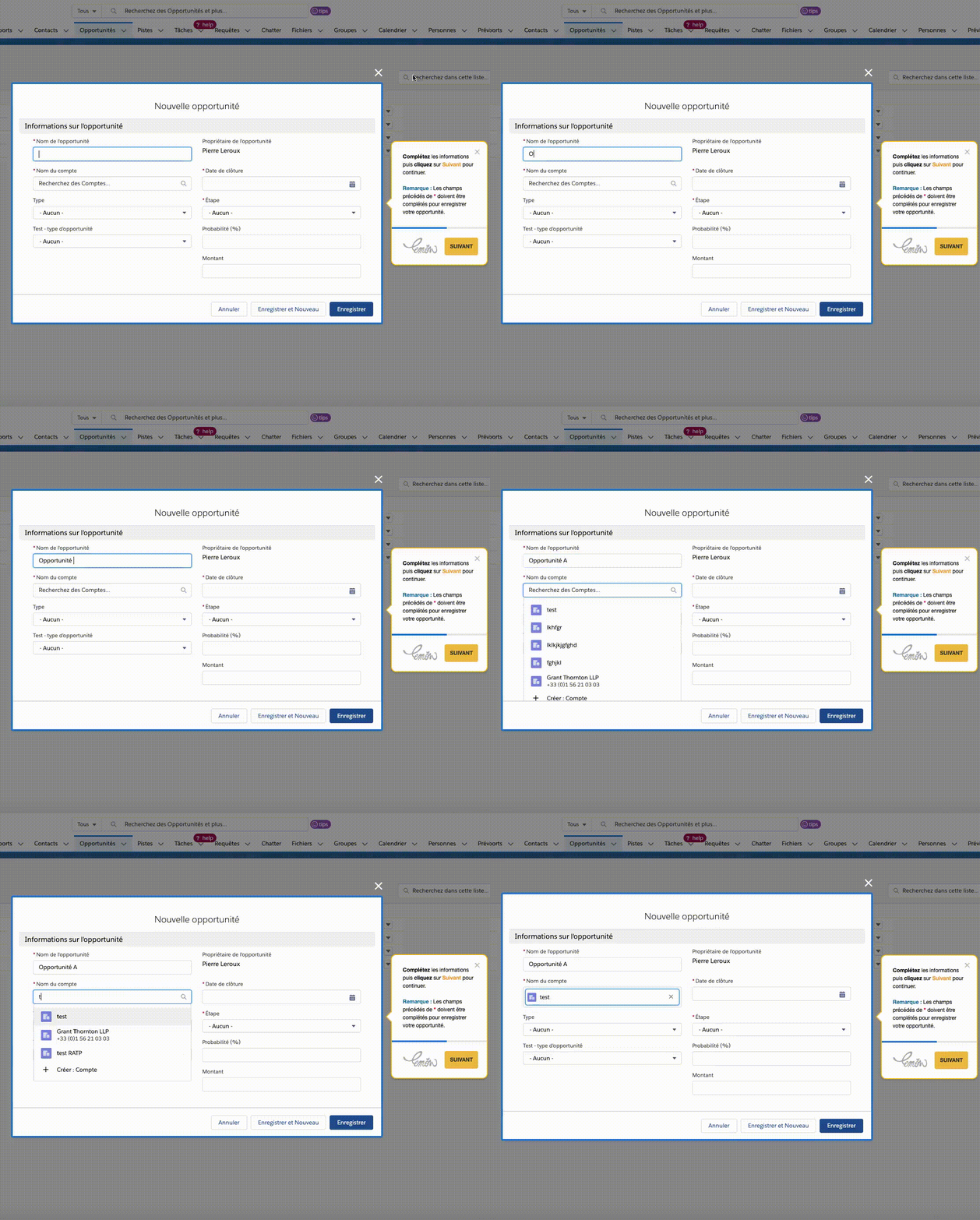
Deploying Salesforce is only the first step. Sustained value depends on how quickly and completely your teams actually use the platform. Lemon Learning integrates directly inside Salesforce and guides marketing and sales teams through every workflow with step-by-step interactive on-demand guides. Employees follow in-app prompts in real time, without leaving the CRM, reducing the time to competence and the burden on IT support.
Oracle CRM, now part of the broader Oracle CX (Customer Experience) Cloud suite, is widely recognized as one of the most comprehensive enterprise CRM platforms on the market. It serves both B2B and B2C use cases and is particularly well regarded for its analytical depth and its integration with Oracle's wider enterprise application portfolio. Oracle is also a common answer to the question "is Oracle a CRM system?" because its CX Cloud includes dedicated sales, marketing, and service modules alongside its legacy Oracle CRM On Demand product.
The broader Oracle application stack relevant to organizations evaluating Oracle CRM includes:
Oracle CX Cloud (Sales, Marketing, and Service): The core Oracle customer relationship management suite, covering lead management, campaign execution, and customer service operations.
Oracle ERP (Enterprise Resource Planning) Cloud: A suite of cloud applications covering finance, project management, and risk management, which integrates with CX data for a unified operational view.
Oracle HCM (Human Capital Management) Cloud: Manages candidate and employee experience, supporting better workforce planning and employee engagement.
Oracle SCM (Supply Chain Management) Cloud: Designed to manage and optimize supply chain operations, relevant for manufacturing and distribution organizations.
Oracle CRM is best suited for large enterprises that already use or plan to use other Oracle products, or that need advanced analytics and data management capabilities as part of their customer management strategy.
To maximize Oracle CRM performance after deployment, three practices consistently matter:
Communicate with end-users early and often so that platform changes or new feature releases do not catch teams off guard.
Provide quick, personalized, and role-specific training rather than one-size-fits-all sessions.
Support users continuously over time through accessible in-app help rather than relying solely on one-time onboarding.
Boost Oracle CRM adoption with interactive guides
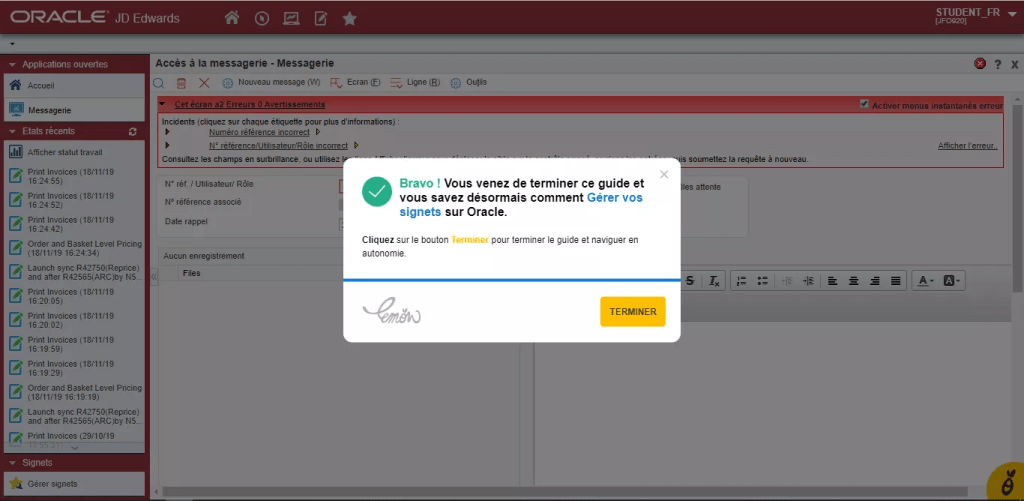
Lemon Learning embeds directly inside Oracle CRM solutions so employees can learn any workflow in real time, whether that means sending emails, customizing marketing campaigns, or managing billing. Tooltips and push notifications let IT and change teams communicate with users from inside the Oracle interface, without requiring them to leave the application or open a separate training portal.
Microsoft Dynamics 365: the CRM integrated with Microsoft 365
Microsoft Dynamics 365 is the CRM and ERP platform built natively within the Microsoft ecosystem. For organizations that already use Microsoft 365, Teams, SharePoint, or Azure, Dynamics 365 offers a level of integration that reduces the friction of building a connected digital workplace. Key modules include:
Dynamics 365 for Sales: Pipeline management, relationship health scoring, and buyer journey visibility to help sales teams prioritize and personalize outreach.
Dynamics 365 for Customer Service: Incident management, customer support timelines, and AI-powered sentiment analysis to build lasting customer loyalty.
Dynamics 365 for Finance and Operations: Automated dunning and credit management, intelligent budgeting and forecasting, and compliance support for finance teams.
Dynamics 365 is particularly well suited for organizations that want to build a connected digital workplace on the Microsoft stack, or for those where familiarity with Microsoft tools will ease user adoption.
Optimize Dynamics 365 adoption with embedded training
Lemon Learning integrates with Microsoft Dynamics 365 to deliver embedded, contextual guides that walk employees through any feature in real time. Because guidance appears directly inside the application, users do not need to toggle between a training portal and their CRM. Teams get up to speed faster and sustain proficiency as the platform evolves.
Oracle CRM vs Salesforce vs Dynamics 365: a direct comparison
No single platform wins on every dimension. The table below summarizes how Oracle CRM, Salesforce, and Microsoft Dynamics 365 compare on the criteria that matter most to buyers.
Criterion
Salesforce
Oracle CX Cloud
Microsoft Dynamics 365
Primary strength
Breadth of CRM features, large partner ecosystem
Analytics depth, B2B and B2C coverage, enterprise integration
Native Microsoft 365 integration, familiar interface
Best fit
Organizations wanting a dedicated best-of-breed CRM with broad customization
Large enterprises already in or moving to the Oracle application stack
Organizations standardized on or moving to the Microsoft ecosystem
Analytics
Strong (Einstein Analytics / Tableau)
Very strong (native data management and analytics suite)
Strong (Power BI integration)
ERP integration
Via third-party connectors
Native with Oracle ERP Cloud
Native with Dynamics 365 Finance and Operations
Customization
Very high
High
High within Microsoft stack
Deployment model
SaaS cloud
SaaS cloud (Oracle Cloud Infrastructure)
SaaS cloud / hybrid
Typical user base
Mid-market to enterprise, sales-led teams
Enterprise, data-intensive industries
Mid-market to enterprise, Microsoft-first organizations
For a structured comparison of additional platforms and a downloadable scoring template, visit our CRM software comparison resource.
Adoption is the final decision factor
Whichever platform you choose, software delivers value only when users engage with it consistently and correctly. A CRM project that stalls at 40% adoption produces a fraction of the return on investment that justified the purchase. That is why adoption planning should be part of the selection process, not an afterthought.
Lemon Learning's sales operations enablement solution works inside Salesforce, Oracle CX Cloud, and Microsoft Dynamics 365 to deliver in-application guidance, contextual tooltips, and real-time push notifications. Whether your team is onboarding to a new CRM or learning a major platform update, embedded guidance reduces the time to proficiency and the volume of support tickets, without requiring users to leave their workflow.
Start by defining your business goals, budget, and must-have features. Then match those criteria against available platforms. The right CRM is the one that best addresses your specific marketing and sales challenges, not necessarily the most feature-rich option on the market.
What are the 4 types of CRM?+
The four main types of CRM are: operational (automating sales, marketing, and service processes), analytical (using data and reporting to understand customer behavior), collaborative (sharing customer information across teams and channels), and strategic (focusing on long-term customer relationship building). Most enterprise platforms such as Salesforce, Oracle CX Cloud, and Microsoft Dynamics 365 combine elements of all four.
Which CRM is best for beginners?+
Beginners often find cloud-based CRMs with guided onboarding easiest to start with. Microsoft Dynamics 365 is a strong choice for organizations already using Microsoft 365, because the interface is familiar. Salesforce Sales Cloud is widely adopted and has a large support community. The best option depends on your team size, budget, and existing technology stack.
Will CRM be replaced by AI?+
AI is transforming CRM rather than replacing it. Leading platforms including Salesforce, Oracle CX Cloud, and Microsoft Dynamics 365 have embedded AI features for forecasting, sentiment analysis, and task automation. CRM systems remain the central data layer; AI enhances what teams can do with that data.
CRM manages customer relationships; ERP manages internal operations. Learn the key differences between CRM and ERP systems, how each works, and when...