
What is application portfolio management? Learn the TIME model, a 5-step APM process and why usage data is the key to deciding which apps to keep or retire.
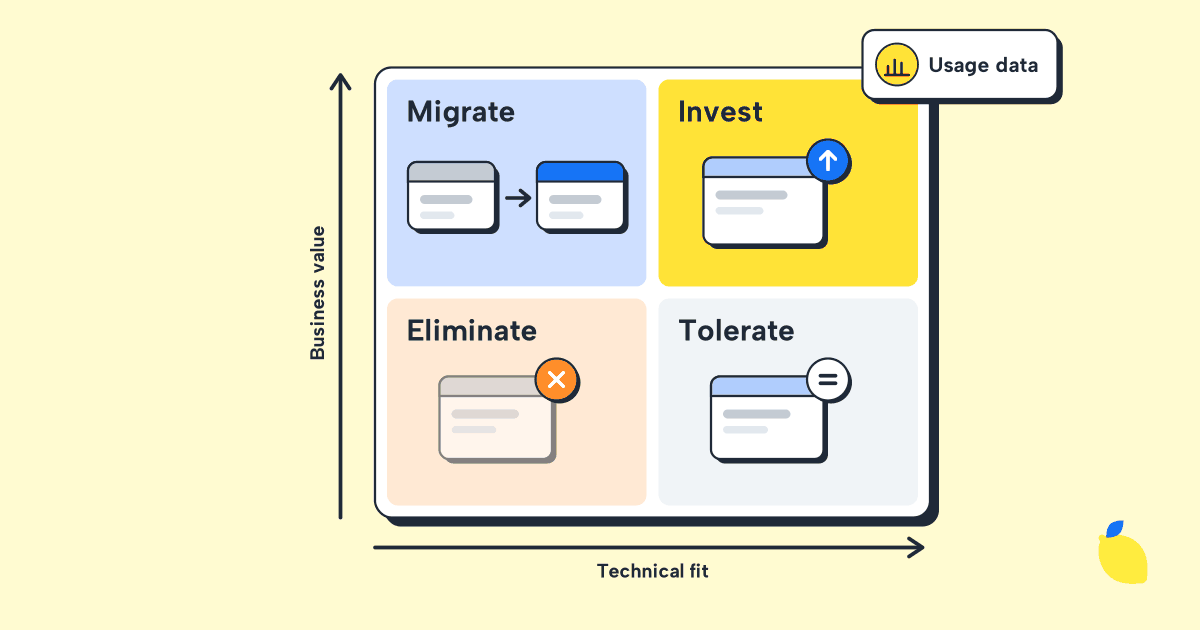
Application portfolio management (APM) is the practice of reviewing every application an organization runs, then deciding which ones to keep, invest in, replace or retire. Done well, it cuts IT costs and complexity. Done with incomplete data, it keeps tools nobody uses and cuts the ones people rely on.
- APM gives IT leaders a structured way to decide what to do with each application.
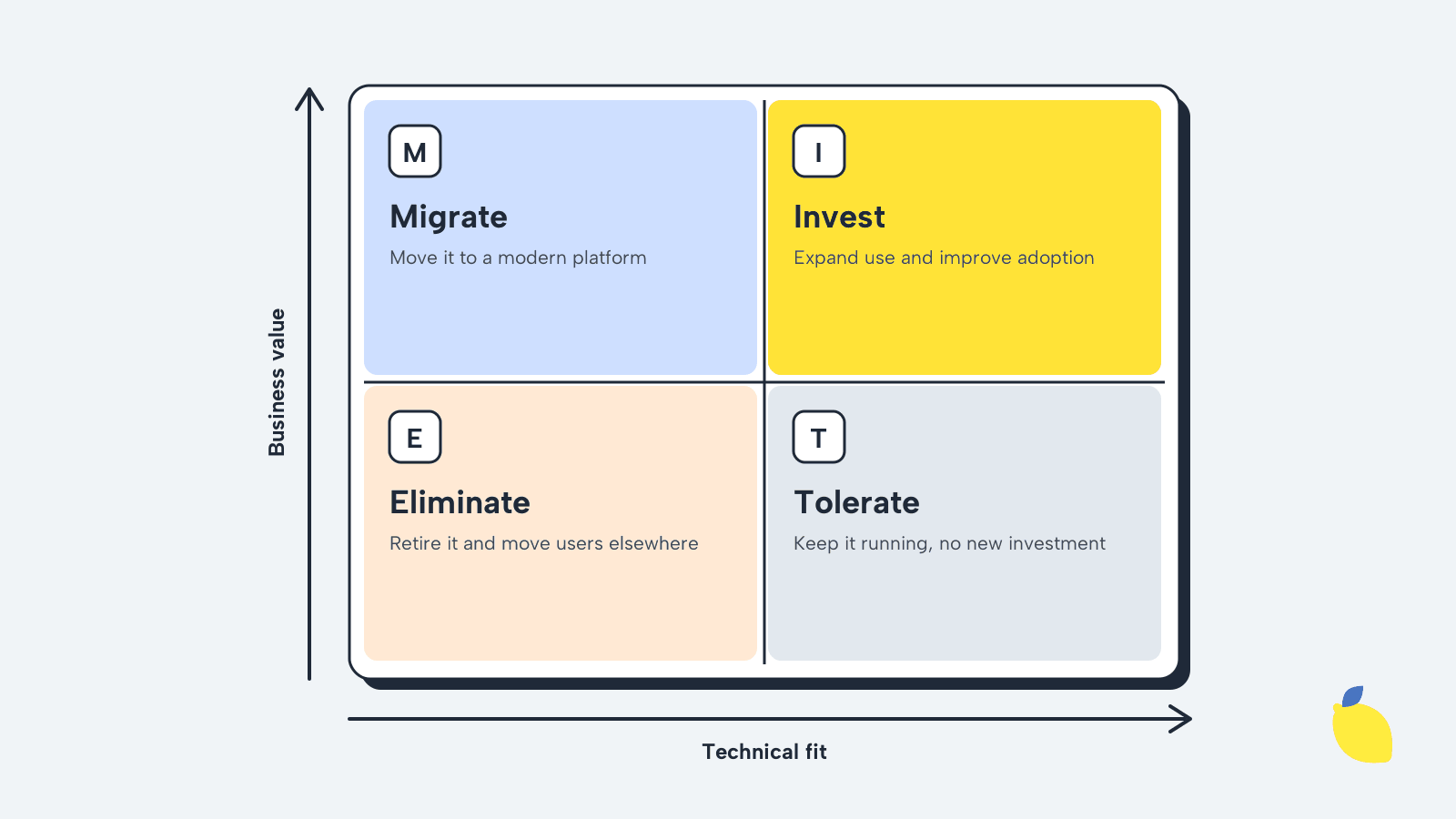
- The TIME model sorts applications into Tolerate, Invest, Migrate or Eliminate.
- Most APM reviews rely on cost and technical data, but miss how applications are actually used.
- Adoption analytics show whether low value comes from the tool itself or from low adoption.
What is application portfolio management?
Application portfolio management is a discipline within IT that treats an organization's applications like an investment portfolio. Each application is assessed on two dimensions:
- Business value: how much the application supports important processes and goals.
- Technical fit: how healthy, secure, supported and well integrated it is.
The result is a clear decision for each application, and a roadmap that aligns the portfolio with business priorities. APM is related to, but broader than, managing SaaS sprawl and shadow IT: it covers every application, including ERPs, in-house tools and legacy systems.
Why application portfolio management matters
| Benefit | What it means |
|---|---|
| Lower costs | Remove duplicate tools and unused licenses |
| Less risk | Identify unsupported or insecure applications before they cause problems |
| Simpler IT | Fewer applications to integrate, secure and support |
| Better investment decisions | Put budget behind the applications that create the most value |
| Clearer roadmap | Plan modernization and retirements in a sensible order |
The TIME model for application portfolio management
The TIME model, popularized by Gartner, is one of the most common ways to classify applications. It places each one in a quadrant based on business value and technical fit.
The application portfolio management process in 5 steps
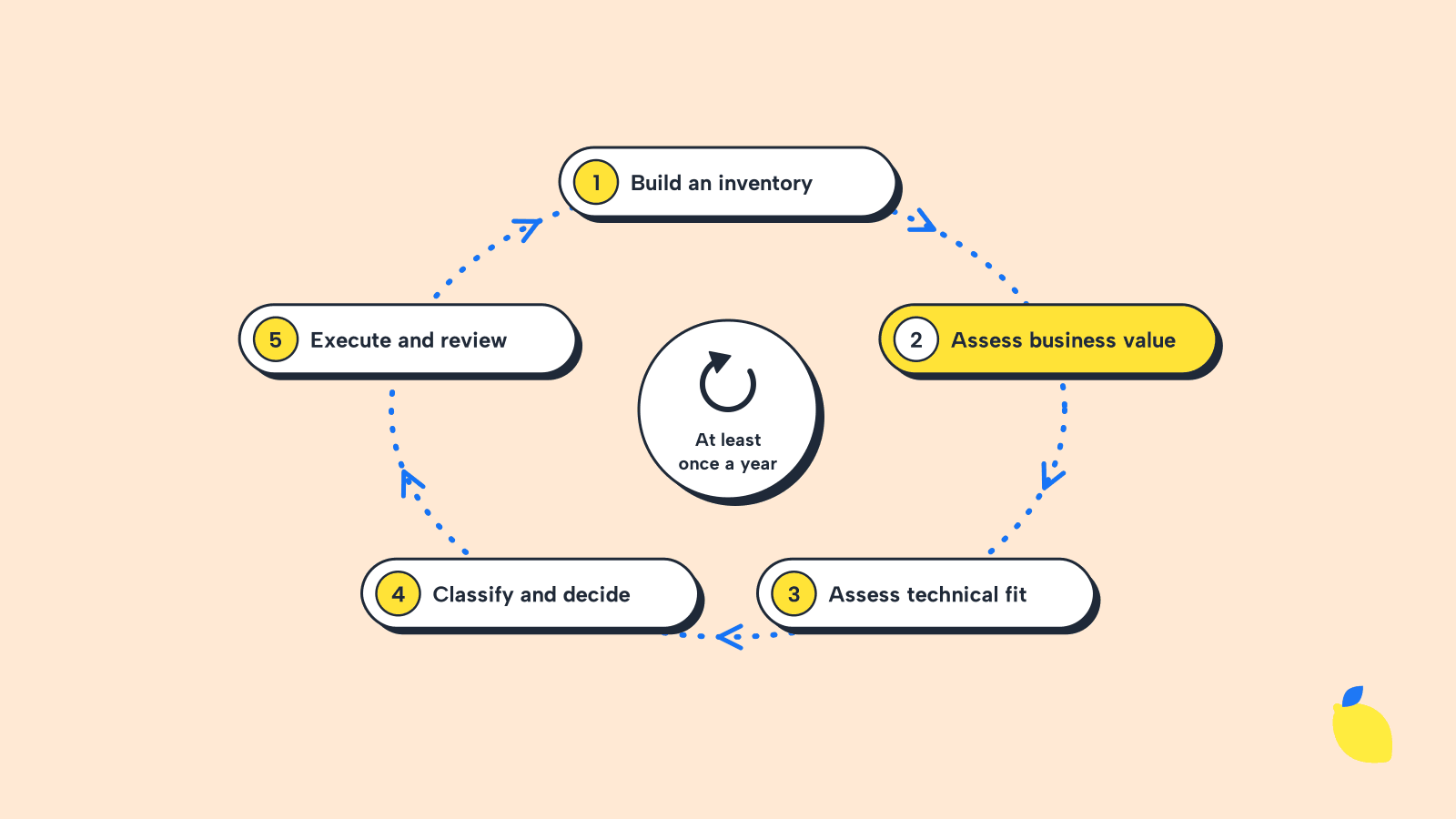
1Build an application inventory
List every application, its owner, cost, contracts, number of licenses and the processes it supports. Include in-house and departmental tools, not just those IT bought.
2Assess business value
Ask business owners which processes depend on each application and what would happen without it. Combine their input with real usage data, so you can see the true level of software utilization rather than relying on opinions.
3Assess technical fit
Review security, vendor support, integration, performance and maintenance effort for each application.
4Classify and decide
Place each application in the TIME model, then agree decisions and priorities with business and IT leaders.
5Execute and review regularly
Turn decisions into a roadmap, then repeat the review at least once a year, because needs, costs and usage change. When you migrate or retire an application, plan how users will move to the new tool, as covered in our guide to reducing the IT support load from too many tools.
Why usage data is the missing piece in APM
Most APM reviews are built on costs, contracts and technical assessments. They rarely include how applications are actually used. That creates two common mistakes:
Adoption analytics fill this gap. Process analytics show which steps users complete and where they drop off, so you can tell whether low value comes from the tool or from low adoption. License optimization then shows which seats can be reassigned or cut. For applications in the "Invest" quadrant, in-app guidance helps more people use them correctly, which increases the value you get from the same licenses. To manage all of this across your whole portfolio, see Lemon Governance.
| TIME decision | Question usage data answers |
|---|---|
| Tolerate | Is usage stable enough to keep it as it is? |
| Invest | Where do users struggle, and what would more adoption be worth? |
| Migrate | Which processes and users need the most support during the move? |
| Eliminate | Who still depends on it, and for which tasks? |
Frequently asked questions
What is application portfolio management?+
Application portfolio management (APM) is the practice of reviewing all of an organization's applications by business value and technical fit, then deciding which to keep, invest in, migrate or retire.
What is the TIME model?+
TIME stands for Tolerate, Invest, Migrate and Eliminate. It classifies each application by business value and technical fit to decide what to do with it.
What are the steps of application portfolio management?+
Build an application inventory, assess business value, assess technical fit, classify each application and decide, then execute the roadmap and review it regularly.
What is the difference between APM and SaaS management?+
SaaS management focuses on cloud subscriptions, licenses and spend. Application portfolio management is broader: it covers every application, including ERPs, in-house tools and legacy systems, and links them to business strategy.
How often should you review your application portfolio?+
At least once a year, and whenever there is a major change such as a merger, a large migration or a new business strategy.