Digital Adoption Platform AI: 5 Ways AI Changes Adoption
How is AI changing the digital adoption platform? See 5 ways AI improves in-app guidance, support and translation, and how to evaluate an AI-powered DAP.
A digital adoption platform with AI uses artificial intelligence to create in-app guidance faster, answer user questions inside the software and adapt help to each person. The goal stays the same: getting employees to use their business applications fully and correctly. AI changes how quickly you can get there.
Key takeaways
AI cuts the time needed to build in-app guides from hours to minutes.
AI assistants answer "how do I…?" questions inside the application, at any time.
AI translation makes multi-language rollouts far faster.
When evaluating an AI DAP, check app coverage, human review and data security, not just the AI features.
What is an AI digital adoption platform?
A digital adoption platform (DAP) sits on top of business software and delivers step-by-step guides, tooltips and announcements directly inside the application, along with analytics on how people use it.
An AI digital adoption platform adds artificial intelligence to this model. AI takes over some of the slowest tasks, such as writing guides and answering repetitive questions, so adoption teams can support more applications and more users with the same resources.
5 ways AI is changing digital adoption platforms
1AI-generated in-product guides
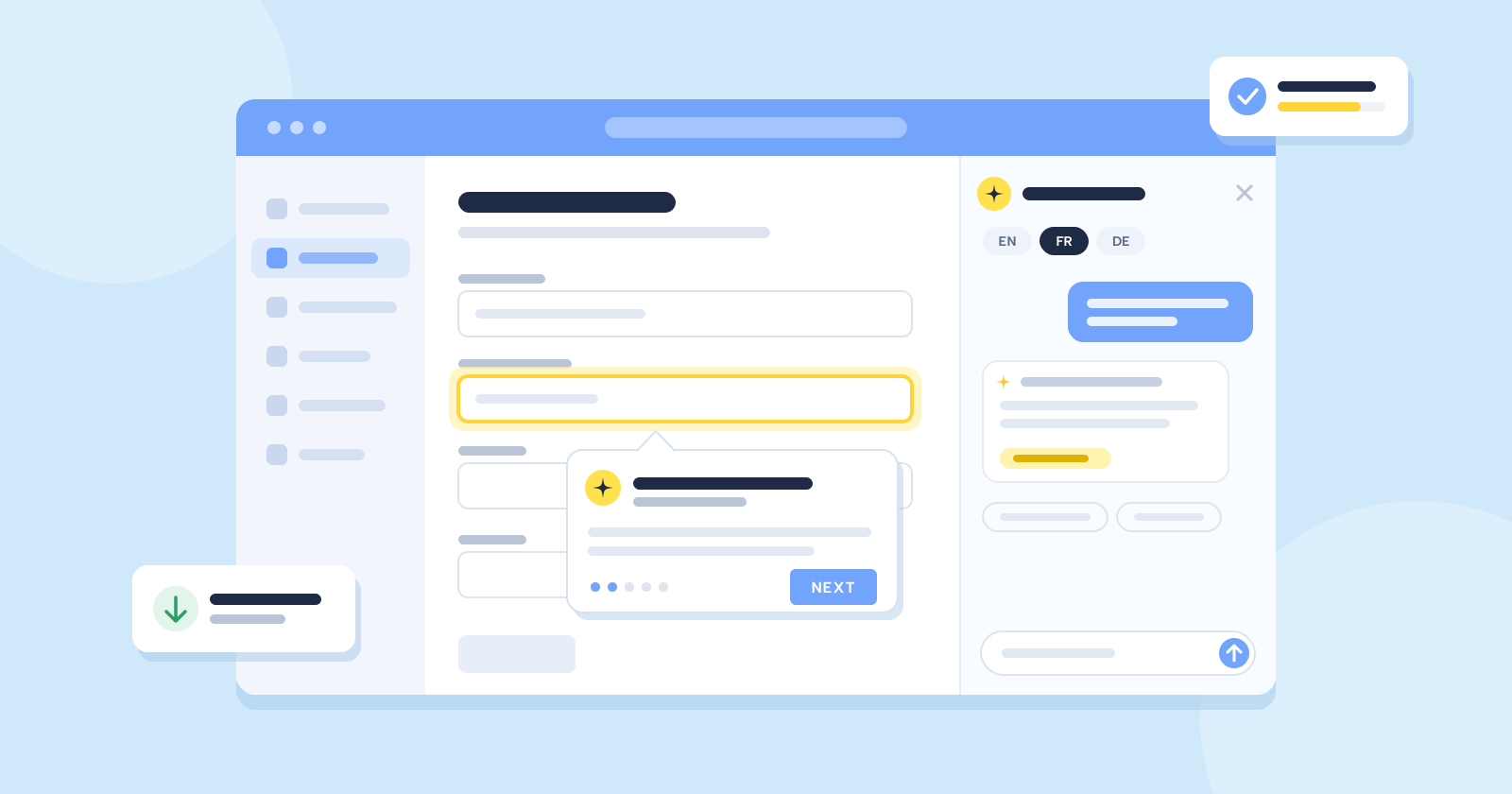
Building a guide manually means mapping every screen and writing every step. With AI, you describe the task in plain language, and the platform generates a structured walkthrough that you review and publish. This is the biggest time saving AI brings to adoption teams.
2AI assistants for in-app support
Instead of searching a help centre or raising a ticket, users ask a question in plain language inside the application. The assistant answers and points them to the right guide, at any time of day.
3AI translation for global rollouts
International organisations used to translate every guide by hand. AI translation produces multi-language versions in minutes, so teams in every country get the same guidance at the same time.
4More personalised guidance
AI makes it easier to tailor help to each user's role, language and context. The direction of travel is clear: guidance that adapts to the person in front of the screen, rather than one walkthrough for everyone.
5Faster insight from usage data
DAPs collect detailed data on how people use software. Machine learning and AI help turn that data into clear priorities, such as which process causes the most errors or which team needs extra support.
Describe a process in plain language and get a step-by-step guide in seconds. The AI reads the interface and builds the flow, and your team edits it before publishing. It works on web, SaaS and in-house applications.
AI also works the other way round. Many organisations are rolling out AI tools such as Microsoft Copilot and finding that licences go unused. A DAP helps here too, by showing employees when and how to use AI features inside their daily workflows. See our guide to making Copilot adoption stick and our AI adoption use case.
How to evaluate an AI-powered DAP
Most DAP vendors now describe themselves as AI-powered or AI-native. To compare them fairly, look past the label and ask these questions:
Question
Why it matters
Does the AI work on all my applications?
Some AI features only support certain SaaS tools. Check coverage for in-house and desktop applications too.
Can my team review content before it goes live?
AI-generated guidance should always be checked by someone who knows the process.
How is my data protected?
Ask about certifications, data hosting and how AI features use your content.
Which languages are supported?
Essential for international rollouts.
Is it easy for non-technical teams?
AI should make authoring simpler, not add another tool that only experts can use.
Can I measure the impact?
Look for usage and process analytics that show whether adoption actually improves.
AI is making digital adoption platforms faster to deploy and easier to scale. The best results still come from combining AI with clear processes and a team that owns adoption. For a wider comparison, see our guide to the best digital adoption platforms.
See it live
See AI-powered guidance on your own software
In a 30-minute demo, we'll show you how Lemon Learning's AI Guide Creator and AI Assistant work inside the tools your teams use every day.
An AI digital adoption platform is a DAP that uses artificial intelligence to create in-app guidance, answer user questions inside applications, translate content and help teams understand usage data.
How does AI create in-app guides?+
You describe the task in plain language. The AI analyses the application's interface, identifies the actions and generates a step-by-step guide, which your team reviews and edits before publishing.
Does AI replace adoption and training teams?+
No. AI removes repetitive work such as drafting guides and answering common questions. Teams still decide which processes matter, review content and measure results.
What is the difference between an AI-native DAP and a DAP with AI features?+
"AI-native" usually means a product was designed around AI from the start, while other DAPs have added AI features to an existing platform. In practice, compare what the AI actually does, which applications it supports and how content is reviewed, rather than the label.
Can a DAP help employees adopt AI tools?+
Yes. A DAP can guide employees on when and how to use AI tools such as Microsoft Copilot inside their daily workflows, and measure whether those tools are actually being used.
Learn how to improve ServiceNow adoption with in-app guidance, AI assistance, and analytics. A practical 2026 guide for CIOs driving enterprise-wide...
Evaluate five categories of Salesforce adoption tools, from in-app guidance to AI assistants, and learn how to reduce support tickets and protect CRM...