Top 5 Integrated ERP and CRM Software Solutions for Business Teams
Compare 5 leading ERP and CRM software solutions - Dynamics 365, Salesforce, Oracle, SAP, and Infor - and learn how integration eliminates data silos and
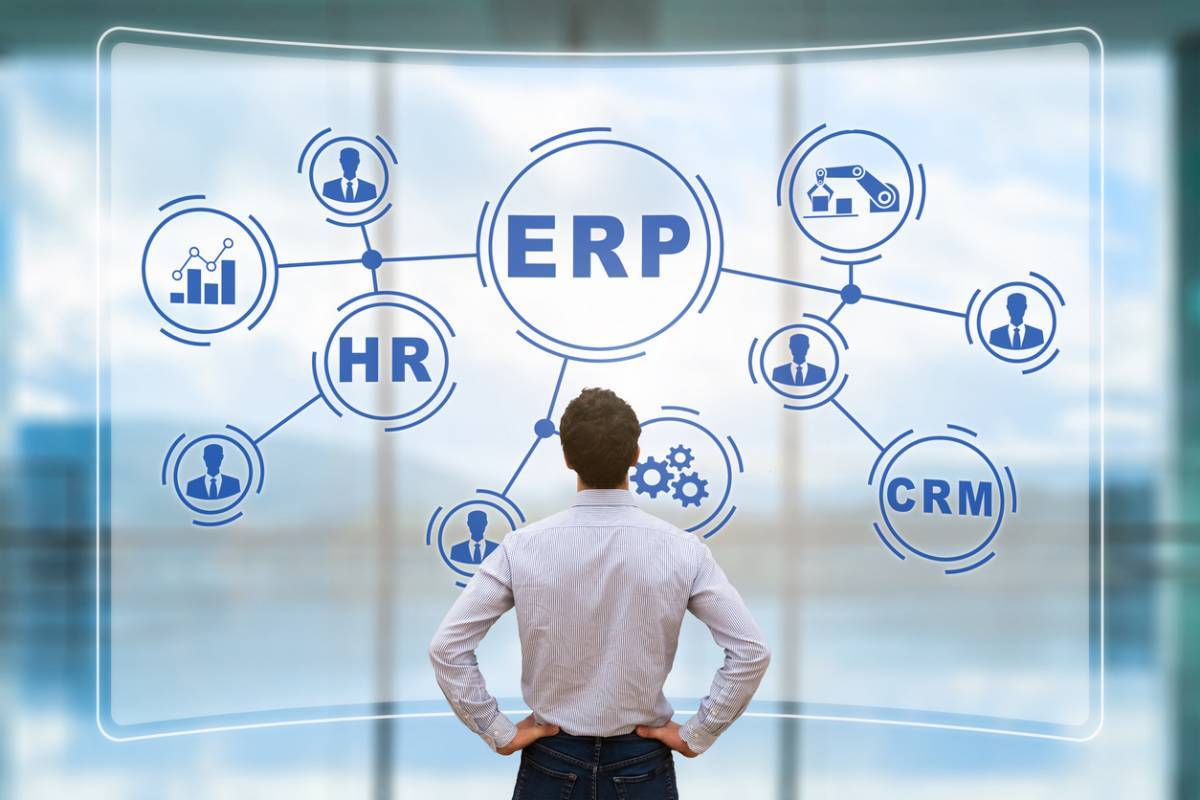
Integrated ERP (Enterprise Resource Planning) and CRM (Customer Relationship Management) software gives your teams a single, connected view of both business operations and customer relationships. The five platforms most commonly used to achieve this are Microsoft Dynamics 365, Salesforce, Oracle, SAP, and Infor. This article explains what each platform offers, how ERP and CRM capabilities combine within each one, and what to consider when choosing between them.
Microsoft Dynamics 365 unifies ERP and CRM functionality on one cloud platform, making it one of the most complete integrated ERP and CRM software options available. Microsoft launched it in 2016 as a modular, scalable system that businesses can configure to match their size and industry. Understanding the difference between CRM and ERP is useful here, because Dynamics 365 addresses both disciplines through distinct but connected application groups.
CRM applications
Sales and Marketing: Provides a unified customer profile, automates sales tasks, and helps teams build more targeted campaigns.
Service: Manages customer support cases, routes issues efficiently, and strengthens long-term customer relationships.
ERP applications
Finance: Delivers real-time financial insights, automates reporting, and connects data across business units to support faster decisions.
Supply Chain: Anticipates disruptions, automates AI-assisted order processing, and provides end-to-end visibility across logistics and inventory.
Because all modules share a common data layer, information entered in the supply chain application is immediately visible to the sales team, eliminating the manual reconciliation that slows many organizations down.
Salesforce is the most widely used CRM platform globally and a natural anchor for any integrated ERP and CRM strategy. Its core modules, Sales Cloud, Service Cloud, Marketing Cloud, and Commerce Cloud, give teams a comprehensive view of every customer interaction across the entire lifecycle.
Salesforce does not ship with a native ERP engine, but it is built to integrate with leading ERP systems. When you connect Salesforce to an ERP platform, you centralize customer and operational data in one place, remove duplicate data entry, and give sales reps access to accurate inventory, pricing, and order status without leaving the CRM. This makes Salesforce a powerful complement to any ERP and CRM software stack rather than a standalone replacement.
Oracle delivers both ERP and CRM capabilities through its cloud application suite, making it a strong option for enterprises that need deep functionality across both disciplines.
Oracle ERP Cloud
Oracle's ERP application covers financial management, project management, procurement, risk management and compliance, and supply chain management. The platform automates manual processes and supports the rapid development of new business models by providing a live view of operational data.
Oracle Advertising and Customer Experience (CX)
On the CRM side, Oracle Advertising and Customer Experience (CX) provides marketing, advertising, sales, and service capabilities in a single suite. It is designed to deliver consistent customer experiences across every touchpoint, from initial ad impression through to post-sale support.
The combination of Oracle ERP and Oracle CX gives large organizations a fully integrated ERP system with no third-party connector required between the two.
SAP is one of the largest ERP software vendors in the world, and its cloud suite now covers CRM functionality as well, making it a comprehensive ERP and CRM solution for mid-size and enterprise organizations.
SAP ERP
SAP S/4HANA Cloud manages finance, sales, purchasing, supply chains, and project operations. Automation is a central feature: routine tasks such as invoice matching and inventory reordering can run without manual intervention, freeing teams to focus on higher-value work.
SAP Sales and Service Cloud
SAP's CRM offering includes tools for e-commerce, customer data management, sales force automation, field service, and marketing. These modules connect directly to the ERP layer, so sales teams always work with current pricing, stock levels, and order histories.
"The key to digital success is data, and to capture it someone has to enter it. It is not the executive committee that enters the data, it is the end user; if they enter it well, then we can use it."
This insight captures why user adoption is as important as the platform choice itself. Even the best integrated ERP software delivers limited value if employees do not use it correctly.
Infor provides both CRM and ERP tools through a single cloud platform, which reduces integration complexity and lowers the total cost of connecting the two systems. It is particularly well established in manufacturing, distribution, and healthcare verticals.
Infor CRM
Infor CloudSuite CRM covers sales, marketing, and service activities. It gives sales teams a complete view of each customer account and helps managers track pipeline performance and customer satisfaction in real time.
Infor ERP modules
Infor's ERP portfolio includes several purpose-built solutions:
Infor CloudSuite Financials - financial management and reporting
Infor LN - manufacturing and project-based ERP
Infor M3 - ERP for process and distribution industries
Infor CloudSuite Industrial - discrete and mixed-mode manufacturing
Infor Distribution SX.e - wholesale distribution management
The breadth of these modules means Infor can serve as a fully integrated ERP solution for organizations with complex, industry-specific requirements.
Connecting ERP and CRM systems delivers measurable operational gains. According to multiple sources in the SERP consensus, the five most consistently cited benefits of ERP and CRM integration are:
Benefit
What it means in practice
Complete customer view
Sales and support teams see order history, payment status, and open tickets in one screen
Improved efficiency
Automated data flows replace manual re-entry between systems
Eliminated data duplication
One record per customer or transaction reduces errors and compliance risk
Better employee collaboration
Finance, operations, and sales teams work from the same data set
Enhanced data accuracy
Real-time synchronization means reports reflect current reality, not yesterday's export
For organizations facing common ERP implementation challenges, choosing a platform that natively combines ERP and CRM functionality, or that offers certified connectors between the two, reduces the technical debt and ongoing maintenance burden.
How to choose the right ERP and CRM software
The best integrated ERP and CRM solution for your organization depends on four practical factors: fit with your existing processes, platform scalability, implementation partner quality, and total cost of ownership. Before committing to a free trial or vendor demo, audit which business workflows you need the system to automate and which teams will rely on it daily.
Once a platform is selected, driving user adoption is the next critical step. A DAP (Digital Adoption Platform) like Lemon Learning overlays contextual guidance directly inside Dynamics 365, Salesforce, Oracle, SAP, or Infor, so employees learn new workflows in the flow of work rather than in separate training sessions. This is especially relevant for CRM and ERP rollouts, where low adoption rates are a leading cause of failed ROI. You can explore how Lemon Learning accelerates adoption of ERP and CRM software on the learning and development solutions page, or download the CRM software comparison guide to benchmark additional tools.
FAQ
Frequently asked questions
What are ERP and CRM solutions?+
ERP (Enterprise Resource Planning) software manages internal business processes such as finance, procurement, supply chain, and HR in a unified system. CRM (Customer Relationship Management) software manages external-facing activities like sales, marketing, and customer service. Many vendors now offer platforms that combine or tightly integrate both, giving organizations a single source of truth for both operational and customer data.
What are the five main ERP modules?+
While module names vary by vendor, the five core ERP modules found across most platforms are: financial management (accounting, budgeting, reporting), supply chain management (inventory, logistics, procurement), human resources (payroll, workforce planning), project management (resource allocation, project accounting), and manufacturing or operations management (production planning, quality control).
What are the top 5 ERP systems?+
According to multiple analyst and vendor sources, the most widely adopted ERP systems are SAP S/4HANA, Microsoft Dynamics 365 Finance and Supply Chain, Oracle Cloud ERP, Infor CloudSuite, and NetSuite (owned by Oracle). Each targets different company sizes and industries, so the best fit depends on your organization's scale and sector.
What is an example of ERP software in practice?+
A manufacturing company using SAP S/4HANA can automate purchase orders when inventory falls below a set threshold, consolidate financial reporting across multiple subsidiaries, and share real-time production data with its CRM team so sales reps always know accurate delivery timelines. This end-to-end data flow is the core value of an integrated ERP system.