Lemon Learning Recognized as a Technology Leader in the Spark Matrix Report
Quadrant Knowledge Solutions named Lemon Learning a Technology Leader in its Spark Matrix report for digital adoption platforms. Learn what that...
What is implicit knowledge? See the definition, how it differs from explicit and tacit knowledge, real workplace examples and 6 ways to capture and transfer it.
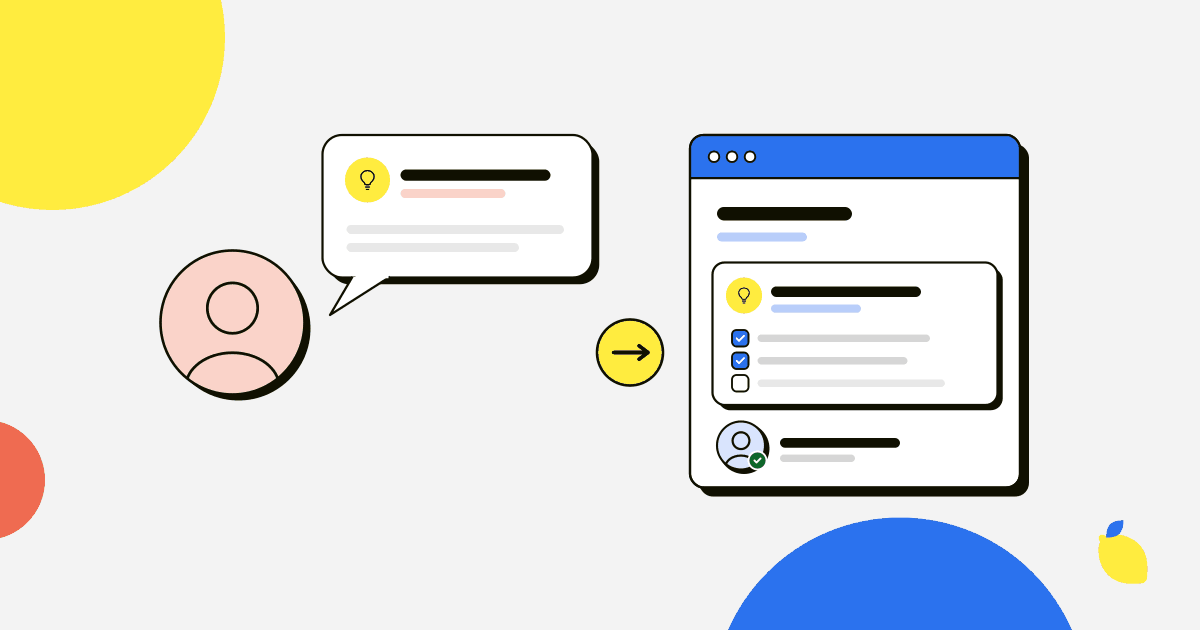
Implicit knowledge is the practical know-how people build through experience and apply without thinking about it, such as knowing which field really matters in a form or the quickest way through a process. It is rarely written down, which is why it so often leaves the organisation when an experienced employee does.
Implicit knowledge is the application of what people know, learned through doing rather than being told. Employees use it automatically, so they often don't realise they have it until someone new asks them how they do something.
The key point is that implicit knowledge can be put into words with some effort. It is knowledge that hasn't been documented yet. That makes it one of the most valuable, and most recoverable, knowledge assets an organisation has.
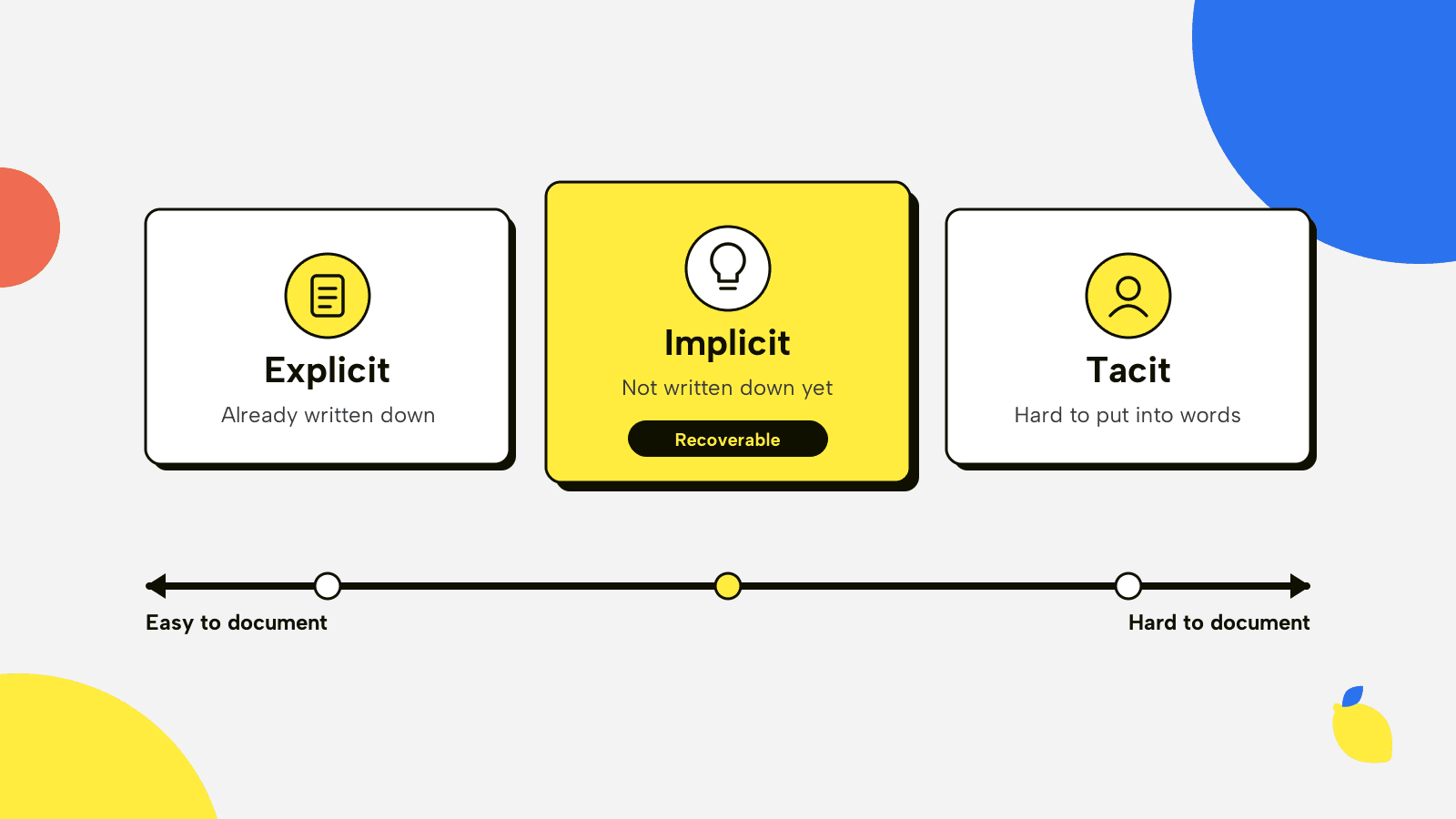
The terms are often used interchangeably, but there is a useful distinction between them.
| Type | What it is | Easy to document? | Example |
|---|---|---|---|
| Explicit | Knowledge that is already written down | Yes, it already is | A procedure describing how to submit an expense report |
| Implicit | Practical know-how from experience that hasn't been written down | Yes, with effort | Knowing which expense category the finance team actually expects |
| Tacit | Deeply personal intuition and skill | Very hard | Sensing that a client is about to cancel from the tone of a call |
Notice how much of this knowledge is about using business software correctly. That is good news: software processes are among the easiest kinds of implicit knowledge to capture.
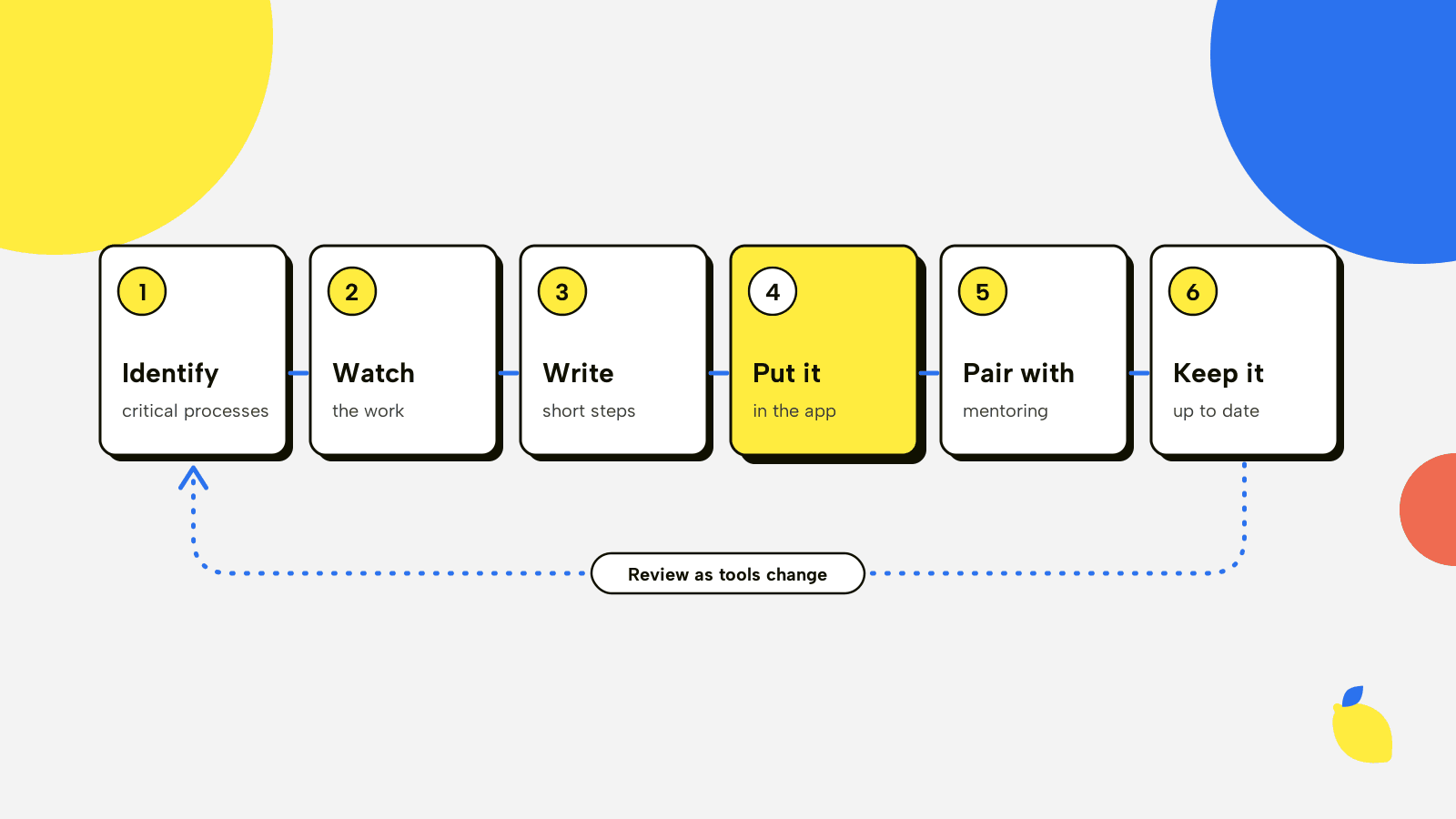
Start with the processes where mistakes are costly or where only one or two people really know the steps. These are your highest knowledge risks.
Experts skip steps when they describe what they do, because those steps feel obvious to them. Shadowing them while they work reveals the real process.
Record the steps, the decision rules and the "why" behind them. Keep it short: one task, one set of steps.
For tasks done in business applications, turn the steps into interactive guides and tooltips inside the tool, so the expert's know-how appears exactly when someone needs it.
Buddy systems and mentoring transfer the judgement that documentation can't fully capture, especially in the first weeks of a new role.
Processes and tools change. Assign an owner to each piece of captured knowledge, and use process analytics to see where people still get stuck.
A digital adoption platform turns your experts' implicit knowledge about business software into guidance everyone can use. With Lemon Learning's AI Guide Creator, an expert can describe a process in plain language and get a step-by-step guide to review and publish, instead of writing documentation from scratch.
| Implicit know-how | Where it lives today | Where it lives with in-app guidance |
|---|---|---|
| The right order of steps in a process | In one expert's head | An interactive guide on the real screens |
| Which value to choose in a field | Passed on by a colleague when asked | A tooltip on the field itself |
| A workaround for a known issue | A message buried in a chat channel | An in-app announcement for the affected users |
Implicit knowledge is one of the most valuable assets in any organisation, and one of the easiest to lose. Capturing the software part of it inside the tools themselves protects it from turnover and makes every new hire productive faster.
Implicit knowledge is practical know-how gained through experience that people apply automatically. It hasn't been written down, but unlike tacit knowledge, it can be documented with some effort.
The terms are often used interchangeably. A common distinction is that implicit knowledge can be put into words with effort, while tacit knowledge is personal intuition that is very hard to articulate.
Knowing which CRM fields matter for forecasts, which cost centre to use for an unusual purchase, the right order of steps to onboard a new hire, or the workaround for a known system issue.
Identify critical processes and the experts behind them, observe how they work, write the steps down simply, turn software know-how into in-app guides, pair it with mentoring and keep it up to date.
It keeps processes running smoothly and helps new hires become productive faster. Because it is rarely documented, it is easily lost when experienced employees leave, which slows teams down and increases errors.
Quadrant Knowledge Solutions named Lemon Learning a Technology Leader in its Spark Matrix report for digital adoption platforms. Learn what that...
Discover the essential change management terms, stages, and challenges every organization needs to know to drive successful, lasting transformation.
What is a learning model? Explore 5 key educational models (Behaviorist, Cognitive, Constructivist, Connectivist, and Humanist) with real training...