The change acceleration process (CAP) is a change management model developed at General Electric (GE) to help organizations make change happen faster and stick. Its core idea is simple: a change only succeeds when a good technical solution is matched by real acceptance from the people who have to live with it.
Key takeaways
CAP was developed at GE and is built on the formula E = Q x A: effectiveness equals quality times acceptance.
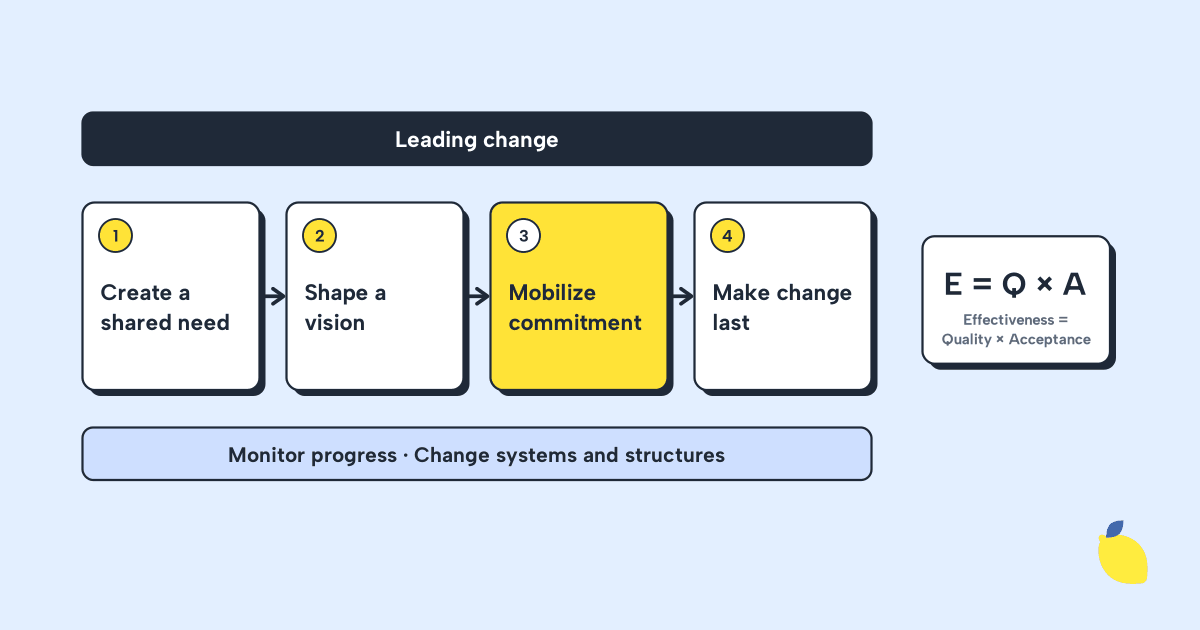
The model has 7 elements, from leading change and creating a shared need to making change last.
Most software rollouts fail on acceptance, not on the quality of the system itself.
In-app guidance and usage data support the two elements teams struggle with most: making change last and monitoring progress.
What is the change acceleration process?
The change acceleration process was created at GE in the late 1980s and early 1990s, as the company looked for a repeatable way to speed up large-scale change. It gave managers a shared framework and vocabulary for leading change, and it is still used today in organizations that want a structured, people-focused approach.
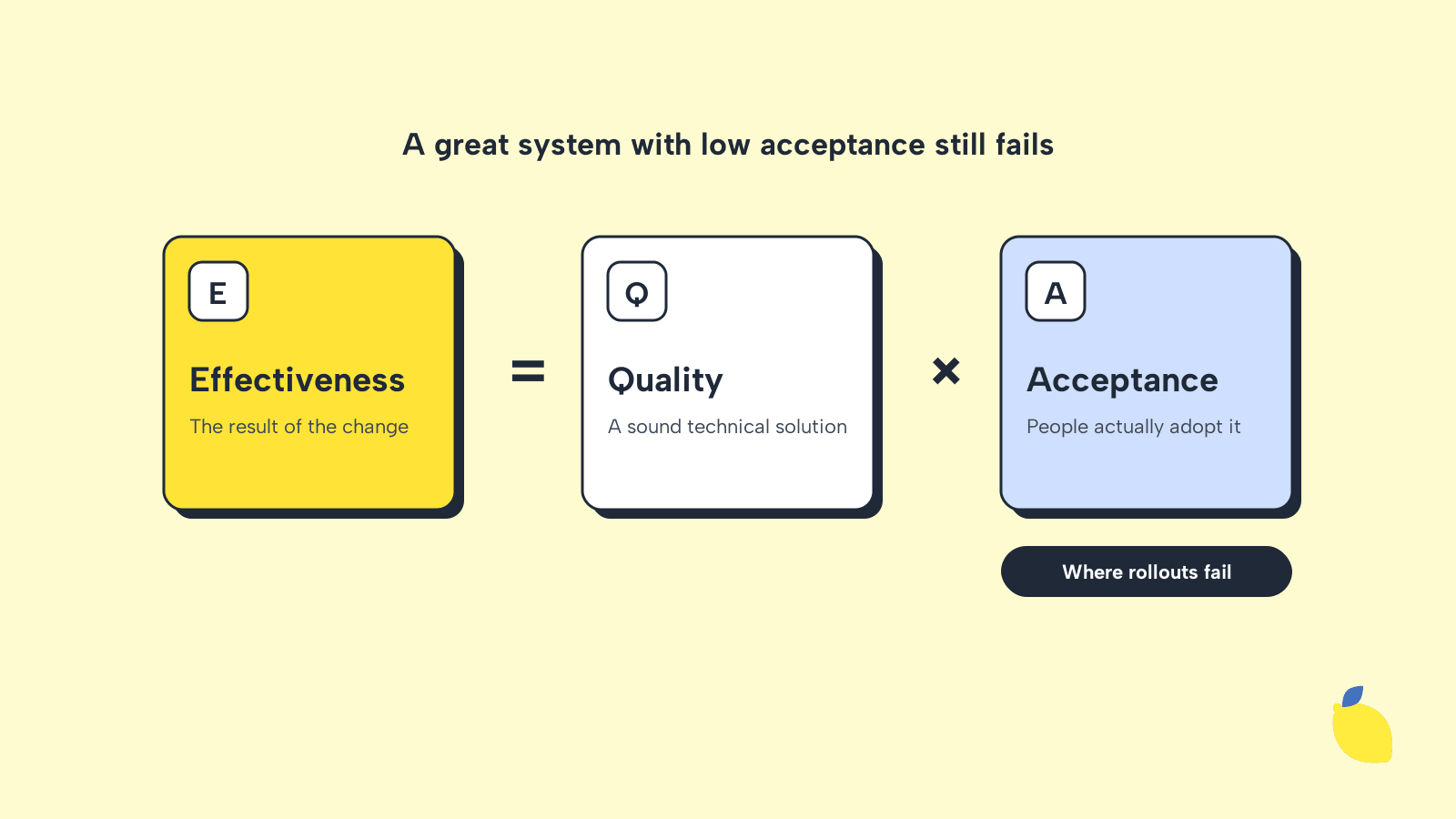
CAP is built on one formula: E = Q x A. The effectiveness (E) of any change equals the quality (Q) of the technical solution multiplied by the acceptance (A) of that solution by the people affected.
Because the formula multiplies, a great solution with low acceptance still produces a poor result.
Because the two are multiplied, not added, a weak score on either side drags the whole result down. A technically perfect system that nobody uses delivers almost nothing. That is why CAP focuses most of its effort on the "A": the human side of change.
The 7 elements of the CAP model
The CAP model is made up of seven elements. Leading change runs across the whole process, four elements form the core sequence, and two more support the change from underneath.
1Leading change
Visible, committed sponsorship from leaders throughout the change. Leaders do not just approve the project: they explain it, model the new behaviors and remove obstacles.
2Creating a shared need
People need to understand why the change matters, and why the need to change is greater than the resistance to it. This means explaining the risks of staying the same as clearly as the benefits of changing.
3Shaping a vision
A clear, concrete picture of what success looks like once the change is complete, described in terms people can see in their daily work.
4Mobilizing commitment
Identifying the key stakeholders, understanding their concerns and building enough support to move forward. This is where resistance to change is addressed directly rather than ignored.
5Making change last
Embedding the change so it survives after the launch. Early wins are celebrated, new habits are reinforced and the old way of working is retired.
6Monitoring progress
Defining measures of success and tracking them, so leaders know whether the change is actually happening and can act early when it is not.
7Changing systems and structures
Aligning processes, roles, incentives and tools with the change, so the organization supports the new way of working instead of pulling people back to the old one.
Free ebook
A practical guide to successful change management, from planning to adoption.
CAP works especially well for software projects such as a new CRM, ERP or HR system, because these projects are often strong on quality and weak on acceptance. Here is what each element looks like in practice:
CAP element
In a software rollout
Leading change
An executive sponsor who uses the new tool themselves and talks about it regularly
Creating a shared need
Show what the old system costs: duplicate data entry, errors, slow reporting
Shaping a vision
Describe a normal working day in the new system, role by role
Mobilizing commitment
Involve key users early as champions and act on their feedback before go-live
Making change last
Provide help inside the tool after launch, not just one round of classroom training
Monitoring progress
Track process completion and support tickets, not just logins
Changing systems and structures
Switch off the old tool, update procedures and make the new system the only way to complete key tasks
CAP vs other change management models
CAP is one of several well-known change models. They are not mutually exclusive, and many teams combine them.
Model
Focus
Best for
Change acceleration process (CAP)
Balancing technical quality with people's acceptance
Organization-wide projects that need strong leadership and stakeholder buy-in
The individual's journey: awareness, desire, knowledge, ability, reinforcement
Understanding where each person is stuck
Lewin's change model
Three stages: unfreeze, change, refreeze
A simple, high-level view of the change
Kotter's 8 steps
Leading change through urgency, coalitions and short-term wins
Large transformations driven from the top
Whichever model you choose, the steps of a successful change management process stay broadly the same: build the case, involve people early and support them well after launch.
Making change last with in-app guidance
In software projects, two CAP elements are often the weakest: making change last and monitoring progress. Training ends at go-live, people forget what they learned, and leaders have little visibility into whether the new system is used correctly.
A digital adoption platform supports both. Interactive guides show users the right steps inside the application whenever they need them, which keeps new habits in place long after launch. Process analytics show which steps people complete and where they drop off, giving leaders the progress data CAP calls for. Together, they raise the "A" in E = Q x A.
See it live
Make your next software rollout stick
In a 30-minute demo, see how Lemon Learning guides users inside your applications and shows you where adoption breaks down.
The change acceleration process (CAP) is a change management model developed at GE. It helps organizations speed up change by balancing the quality of a technical solution with people's acceptance of it.
What does E = Q x A mean?+
Effectiveness equals quality multiplied by acceptance. Because the two are multiplied, a strong technical solution with low acceptance still produces a poor result.
What are the 7 elements of the CAP model?+
Leading change, creating a shared need, shaping a vision, mobilizing commitment, making change last, monitoring progress, and changing systems and structures.
What is the difference between CAP and ADKAR?+
CAP looks at change from the organization's point of view, focusing on leadership, stakeholders and systems. ADKAR focuses on the individual's journey through the change. Many teams use both together.
Can CAP be used for software implementations?+
Yes. CAP is well suited to CRM, ERP and HR system rollouts, which are often technically sound but struggle with user acceptance. In-app guidance and usage analytics help with the making change last and monitoring progress elements.