Discover the fundamentals of instructional design: key phases, methodologies, the ADDIE model, and the tools shaping effective training programs in 2026.
Instructional design: the key to high-quality training
Key phases of instructional design
The ADDIE model: five essential steps
Tools and concepts in 2026
The future of instructional design
Instructional design encompasses the methodological processes of creating, implementing, and evaluating learning experiences. This systematic approach integrates learning psychology, pedagogy, communication, and information technology. As digital tools and corporate learning continue to grow in importance, instructional design has become essential to building effective online and in-person training programs. Below is a guide to the key stakes, phases, and tools that educators and trainers rely on.
The role of instructional design
Instructional design is central to the success of any training project, whether in-person or remote. It provides a framework for creating engaging and effective learning experiences that maximize skill acquisition and meet defined learning objectives.
Learner-centered methodologies, such as the ADDIE model (Analyze, Design, Develop, Implement, Evaluate), are among the most widely used. Training programs should not only transfer knowledge but also promote active participation, collaboration, and learner autonomy. Instructional designers build training pathways enriched with digital tools and tailored to each audience, using resources such as:
Interactive videos
Simulations
Quizzes
Instructional design also serves as an assessment framework, allowing organizations to measure skill acquisition and track progress toward learning goals. Continuous evaluation and regular feedback help refine courses based on learner needs.
The challenges of instructional design
One of the primary challenges in instructional design is keeping pace with the evolving needs of both learners and businesses. The learning market changes rapidly, with growing demand for digital skills and flexible training formats.
Educational objectives must adapt to diverse learner profiles, so identifying your target audience early is essential. Audiences may include:
University students pursuing a bachelor's or master's degree
Recent graduates entering the workforce
Seasoned professionals seeking career changes
Instructional design addresses these varied audiences by creating modular, personalized courses. Technologies such as artificial intelligence (AI) and Learning Management Systems (LMS) make individualized progress tracking more achievable.
Designing inclusive and accessible content is equally important. The growth of distance learning introduces additional challenges around maintaining engagement and balancing multiple educational resources to deliver genuinely immersive experiences.
Instructional design: the key to high-quality training
This methodology underpins the quality of training programs and the achievement of educational objectives across sectors, from higher education to corporate learning. Well-designed training optimizes outcomes by aligning with real learner needs and target competencies.
The success of a training program depends heavily on the methodology used during development. Incorporating diverse teaching tools sustains learner interest and supports knowledge retention. Digital resources such as simulators, e-learning modules, and virtual classrooms are now central to effective training design.
By integrating these elements, instructional design enhances learner performance and maximizes teaching effectiveness, whether for university-level programs or corporate training initiatives.
Key phases of instructional design
1. Needs Analysis: The first phase involves understanding learner expectations and organizational goals. Instructional designers identify the competencies to be developed and the primary outcomes to be achieved.
2. Content Design: Once needs are clear, instructional designers create the training content, ensuring each module meets educational standards and aligns with proven learning methods.
3. Resource Development: This phase focuses on producing materials that support knowledge absorption, with an emphasis on digital tools such as:
Videos
Infographics
Interactive quizzes
E-learning modules
4. Implementation: Training is delivered in in-person, online, or hybrid formats. Instructional designers oversee this stage to ensure smooth execution.
5. Evaluation: Using assessment tools, instructional designers measure skill acquisition and adjust the training pathway where needed.
The ADDIE model: five essential steps
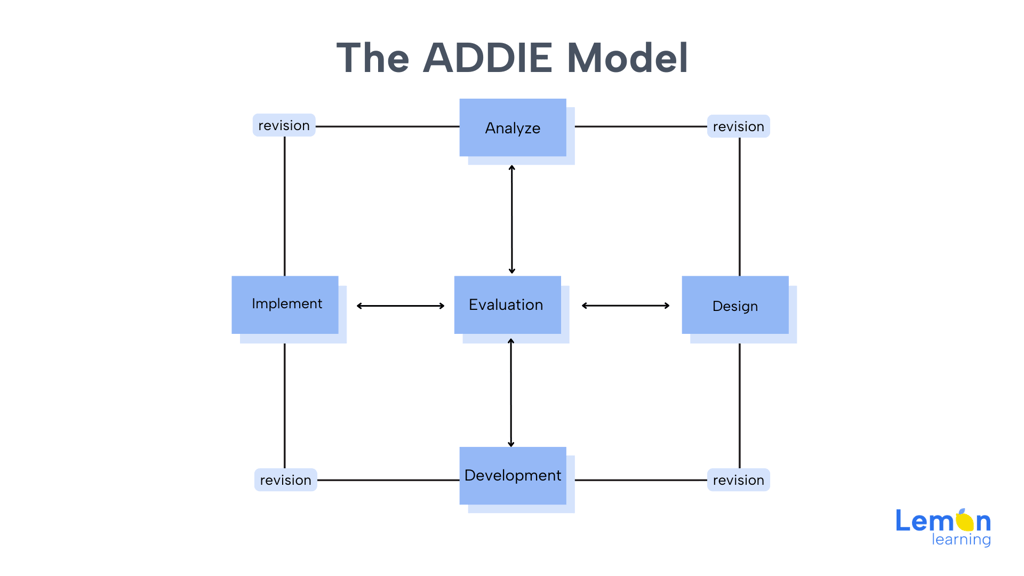
The ADDIE model is a sequential instructional design methodology that supports SMART objectives (Specific, Measurable, Achievable, Realistic, Time-bound) at every project stage. It is structured into five steps:
Analyze: Identify learner needs, educational goals, and the training context.
Design: Develop a learning plan covering course modules, teaching resources, and assessment methods.
Develop: Create content based on the established plan, including videos, documents, and e-learning modules.
Implement: Deploy the training program, managing logistics and supporting trainers during delivery.
Evaluate: Assess program effectiveness using learner feedback and performance metrics.
This structured approach optimizes the training process and helps ensure effective, measurable learning outcomes.
Tools and concepts in 2026
In 2026, instructional design leverages advanced digital tools to create interactive and immersive learning experiences. Key resources include:
LMS Platforms: These systems manage remote training programs, track learner progress, and deliver tailored resources.
Multimedia Learning: Videos, audio content, and interactive tools enrich training pathways and improve knowledge retention.
Simulators: Widely used in technical fields, simulators apply virtual reality to provide hands-on training in controlled environments.
Digital Assessment Tools: Interactive quizzes, automated feedback, and adaptive evaluations measure skill acquisition and sustain engagement.
Instructional design remains a cornerstone of education and corporate training in an increasingly digital world. In 2026, instructional designers play a pivotal role in developing programs that meet the needs of both learners and organizations. By applying proven methodologies like the ADDIE model and integrating innovative digital tools, instructional design continues to adapt to rapid changes in the job market. Whether for in-person, remote, or hybrid learning, it remains a critical factor in achieving optimal training results.
RACI and RASCI are responsibility assignment matrices used in project management. Learn their definitions, meanings, and the key differences between...