How to Build an Effective Employee Development Plan
Learn how to build an effective employee development plan in 7 steps. Includes SMART goal-setting, skills gap analysis, milestone examples, and practical
2. What are the benefits of an employee development plan?
3. Steps to build an effective employee development plan
Example milestones for a Content Marketing Manager
Cross-application analytics with Lemon Learning
The widening digital skills gap is one of the most pressing challenges facing organizations today. As digital transformation accelerates, particularly with artificial intelligence, demand for new competencies is outpacing the current skill levels of many workforces. This makes a structured employee development plan more critical than ever.
By implementing structured development plans, HR professionals and L&D teams can bridge those gaps while also boosting job satisfaction, engagement, and retention. In a landscape where skilled employees are more valuable than ever, an effective employee development plan supports both individual and organizational growth.
What is employee development?
Employee development is the ongoing process of helping your team build new skills and grow in their careers while also meeting company goals. It is not a one-off training event. It is a long-term commitment to identifying skills, setting growth milestones, and tracking progress over time. When employees feel supported, they are more engaged and more likely to see a future with their employer. Without development opportunities, people stagnate, feel demotivated, and eventually leave.
Companies face a straightforward choice: spend resources on constant turnover and replacement hiring, or invest in developing the workforce they already have. By creating an employee development plan, organizations do not just fill skill gaps. They empower employees to grow, adding value to both the individual and the business.
94% of employees would stay at a company longer if it invested in their career.
(LinkedIn, Developing Employees and Improving Performance)
1. What is an employee development plan?
An employee development plan is a strategic tool that gives employees a clear path to advance their skills and experience. These plans align with company goals and provide measurable metrics and milestones so employees can track their own progress, whether through quarterly reviews, annual performance evaluations, or internal mobility opportunities.
In today's fast-evolving digital landscape, where job descriptions shift constantly, development plans ensure that employees' skill sets keep pace with changing tasks and technologies. Development should be tailored to each team's unique needs. For example:
Sales teams benefit from CRM and prospecting software training, alongside role-playing and product knowledge sessions that sharpen customer interactions.
Marketing teams stay competitive through upskilling in data analytics, SEO, automation tools, and digital marketing trends, often via online courses.
Developers keep pace with the latest programming languages and technologies through coding bootcamps and peer mentorship.
HR teams need training on advanced recruiting strategies, compensation software, talent management, and evolving compliance standards.
The key is consistency in skills development across all teams.
2. What are the benefits of an employee development plan?
An employee development plan delivers measurable benefits for individuals and for the organization as a whole:
Boosts performance: Tailoring development to each role cultivates the right skills and drives better productivity across teams.
Enhances engagement and retention: Consistent growth opportunities increase employee loyalty and reduce turnover.
Attracts top talent: Skilled candidates choose employers where they know they can grow and be supported.
Prepares for future roles: Structured plans build competencies for internal mobility and leadership pipelines.
Strengthens company image: A visible commitment to employee growth positions your organization as a forward-thinking place to work.
Supports digital adoption and change management: Emphasizing digital skills and adaptable mindsets helps teams transition to new tools and systems more smoothly.
3. Steps to build an effective employee development plan
Step 1. Standardize your employee development plans
Start by mapping out each employee's journey. What are their personal career objectives? A solid plan typically includes:
Defining clear career aspirations
Outlining 3 long-term goals (for example, becoming a senior product manager or leading a tech team)
Breaking down 3 short-term objectives (such as mastering a new programming language or improving cross-team collaboration)
Identifying specific learning activities with concrete resources and deadlines
Align each employee's current role with their future ambitions. Look at their day-to-day tasks and identify which ones fuel their goals. The plan should find ways to automate, delegate, or minimize low-value work so employees can spend more time on meaningful development.
Leave room for skill-building through independent training, mentorship, or workshops, and schedule regular check-ins to keep the plan on track.
Step 2. Identify business and employee goals
Effective employee development aligns individual goals with the company's long-term strategy. This ensures that employee growth directly contributes to business success while keeping workers engaged and motivated.
Mapping individual aspirations to business needs
Start with focused conversations about each employee's career goals and desired development paths. Then review those goals alongside the company's strategic roadmap to find where employee growth can support key business initiatives. Look for opportunities where developing new skills can both advance the employee's career and close organizational skills gaps.
For example, if an employee wants to develop leadership skills and the company plans to expand its project management capacity, build a development path that guides them toward a team lead role.
Setting SMART goals with dual impact
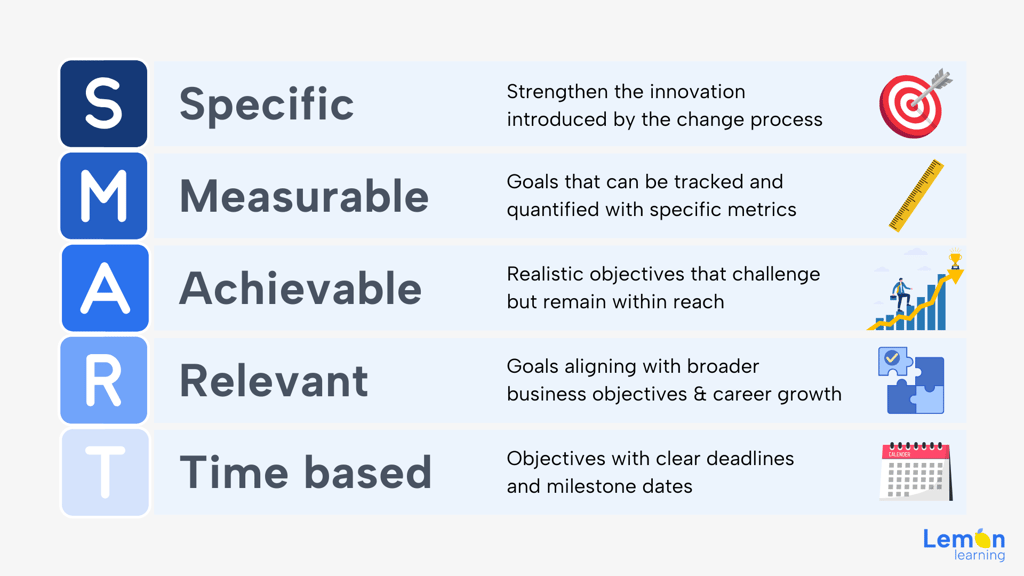
Set SMART goals (Specific, Measurable, Achievable, Realistic, and Time-bound) that create value for both the employee and the organization. Include a mix of short-term wins and long-term development objectives, with clear metrics to track progress on both personal growth and business contribution.
For example: "Complete advanced data analytics certification within 6 months to lead the department's new business intelligence initiative." This type of goal shows how individual development can directly support business objectives while giving employees a concrete target.
Step 3. Assess skills and competencies
A skills gap analysis helps identify the areas where employees need development to meet current demands and prepare for future challenges. It compares two lists: the skills employees currently have and the skills the role requires. The gap between those lists points to priorities for training and development.
For example, a customer success manager might excel at client communication but lack experience with data analytics. If analyzing customer usage data becomes a core requirement, that represents a skills gap to address in their development plan.
Use a combination of self-assessments, manager evaluations, and performance data to build an accurate skills inventory.
Step 4. Create clear objectives and milestones
Once you have identified development needs, set clear, measurable objectives to guide progress. These should be realistic, achievable, and aligned with both individual career aspirations and business goals.
KPIs and metrics
Balance quantitative and qualitative KPIs to gauge progress effectively.
Quantitative metrics might include:
Completing a set number of training courses or certification programs
Achieving specific proficiency levels in priority skills
Delivering a target number of successful project outputs
Qualitative metrics can assess:
Demonstrated leadership in team initiatives
Positive feedback from managers, peers, and customers
Displaying core company values in daily work
Together, these KPIs give a well-rounded view of an employee's progress and the impact of their development.
Example milestones for a Content Marketing Manager
Here is how a one-year growth plan might look for a content marketing manager:
Short-term (0-3 months):
Complete a content strategy certification program
Increase blog post conversion rates by 20%
Reach a defined target for lead magnet downloads
Mid-term (3-6 months):
Launch a new content pillar that drives a 15% increase in organic traffic
Establish a repeatable process for managing the editorial calendar
Lead a cross-functional project to improve content localization
Long-term (6-12 months):
Earn an inbound marketing certification
Achieve a 25% year-over-year increase in marketing-qualified leads
Take on expanded responsibilities for content distribution and paid promotion
By combining quantifiable targets with developmental milestones, you create a clear path for the employee to build new skills, take on more strategic work, and contribute meaningfully to broader business priorities.
Step 5. Select developmental activities
With goals and milestones defined, identify the specific activities and resources that will help employees acquire new skills. Build a learning ecosystem that goes beyond the traditional training course and accounts for different learning styles and preferences.
Key developmental activities to consider:
Digital learning: An LMS, digital adoption platform, or eLearning solution can provide effective training that increases software adoption. Lemon Learning in particular supports immediate adoption through a learning-by-doing methodology, guiding employees through real tasks inside the software itself.
Mentorship and coaching: Pair employees with experienced internal or external mentors for personalized guidance and support.
Customized learning paths: Tailor development plans to individual needs, for example combining software feature training with weekly webinars and coaching sessions.
Blending these learning modalities creates a holistic development ecosystem that addresses a wide range of skill gaps and learning preferences. For a deeper look at how blended approaches work in practice, see blended learning as a professional training solution.
Step 6. Monitor progress and offer feedback
Continuous assessment and feedback are essential for keeping your employee development plan on track. Use a combination of digital analytics and regular management check-ins to monitor progress and make adjustments when needed.
Cross-application analytics with Lemon Learning
To gain comprehensive visibility into employee training and software adoption, consider implementing a digital adoption platform like Lemon Learning. It offers cross-application analytics that track user behavior, engagement, and adoption across your organization's various tools, giving L&D and HR teams the data they need to evaluate progress and refine development activities.
Step 7. Adjust the plan as needed
An employee development plan is a living document, not a one-time exercise. As you implement the plan and monitor progress, be prepared to adapt it based on feedback, performance data, and changing business priorities.
Schedule regular check-ins to review each employee's growth trajectory and make necessary adjustments. These conversations are an opportunity to celebrate wins, address challenges, and refine timelines, learning activities, or target metrics. Keeping an agile mindset ensures your development initiatives stay relevant and impactful as both roles and the organization evolve.
FAQ
Frequently asked questions
What is the 70-20-10 rule for employee development?+
The 70-20-10 model suggests that roughly 70% of learning comes from on-the-job experience, 20% from social learning such as mentoring and feedback, and 10% from formal training programs like courses or certifications.
What is an example of an employee development plan?+
A content marketing manager's plan might include completing a content strategy certification in the first three months, launching a new content pillar by month nine, and earning an inbound marketing certification by the end of the year, with measurable targets tied to each milestone.