Top ERP Vendors in 2026: The Leading Systems for Enterprise Decision-Makers
Compare the top ERP vendors of 2026 including Oracle, SAP, Microsoft, Infor, and Sage. Review key products, training options, limitations, and customer
The top ERP vendors in 2026 are Oracle, Microsoft, SAP, Infor, and Sage, each offering distinct strengths in cloud deployment, industry coverage, and scalability. Choosing between them requires understanding their flagship products, training support, known limitations, and the types of organizations they serve best.
Enterprise Resource Planning (ERP) systems have become essential infrastructure for organizations managing finance, operations, supply chain, and human resources in a single platform. Yet one of the most persistent challenges companies face is not selecting an ERP vendor but driving end-user adoption after go-live. This guide covers the top five ERP vendors, their flagship products, and what decision-makers should know before committing.
What Makes an ERP Vendor a Market Leader?
A leading ERP vendor combines broad functional coverage, proven cloud infrastructure, active product development, and a large customer base across multiple industries. The most widely cited leaders in analyst rankings and practitioner surveys consistently include Oracle, SAP, Microsoft, Infor, and Sage, alongside growing platforms such as Epicor, Acumatica, and Workday for specific segments.
The table below summarizes the top five vendors covered in this guide.
Vendor
Flagship ERP Product(s)
Primary Target Market
Deployment Model
Oracle
NetSuite, Fusion Cloud ERP
Mid-market to large enterprise
Cloud
Microsoft
Dynamics 365
Small to mid-sized companies
Cloud and on-premises
SAP
S/4HANA
Large and scaling enterprises
Cloud, on-premises, hybrid
Infor
Infor M3
Manufacturing and distribution
Cloud
Sage
Sage X3
Small and mid-sized enterprises
SaaS, cloud, on-premises
Top 5 ERP Vendors and Their Flagship Products
The five vendors below represent the most established names in the global ERP software list. Each section covers the flagship product, built-in training resources, known limitations, and reference customers.
1. Oracle
Oracle is a global leader in cloud applications and database technology. It offers two distinct ERP products suited to different organizational sizes and needs.
Oracle NetSuite
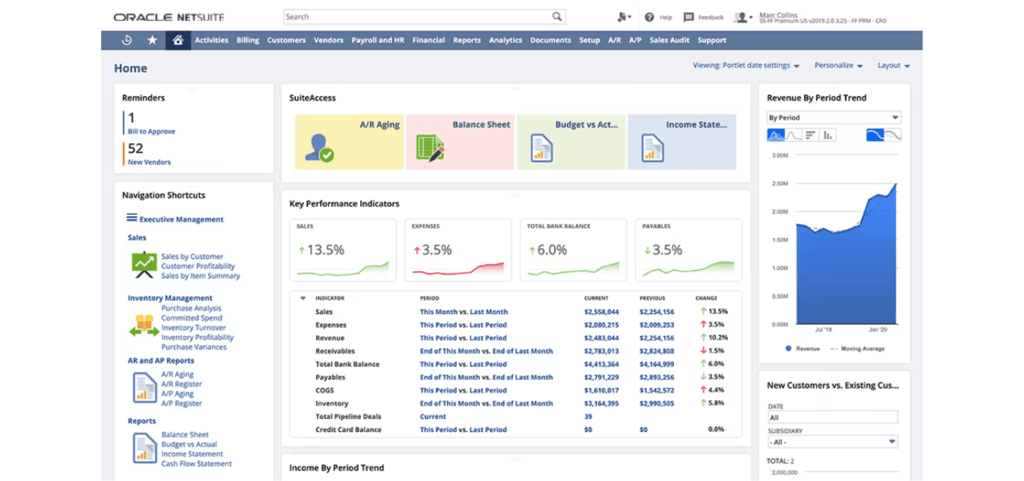
Oracle NetSuite is a cloud-native ERP platform designed primarily for small to mid-market and growing enterprises. Its modular architecture suits manufacturing and distribution companies looking for a customizable system. Oracle also developed SuiteSuccess, a complementary offering designed to reduce time-to-value during NetSuite implementations. SuiteSuccess includes pre-built dashboards for monitoring key performance indicators (KPIs), managing workflows, and generating reports.
Training and adoption
Oracle's Learning Cloud Support Explorer Pass provides complimentary access to a range of introductory learning content for NetSuite users.
Limitations
User reviews consistently flag constraints in customer support. The standard support package is limited to ten hours of online assistance available on weekdays only, while premium customers receive around-the-clock coverage. The complexity of available support documentation has also drawn criticism, particularly for end-users who are not technically experienced.
Reference customers
e.l.f. Cosmetics, Ceridian, Zendesk, Mazars
Oracle Fusion Cloud ERP
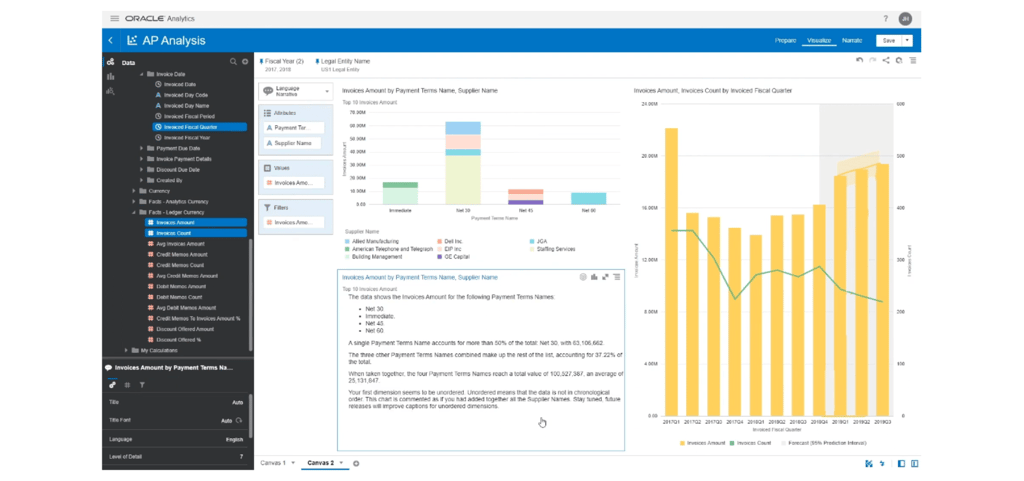
Oracle Fusion Cloud ERP is Oracle's most comprehensive offering, providing software modules across all major business departments. It is designed for mid-sized to large enterprises with a product-centric operational model. Fusion Cloud is notable for its advanced integration capabilities and supports flexible customization relative to NetSuite.
Training and adoption
Oracle Fusion Cloud offers a broad selection of free training materials. Comprehensive training and Oracle certification, however, require a paid Cloud learning subscription. User reviews also note a steep learning curve associated with the platform's depth and complexity.
Limitations
As one of the largest ERP systems available, implementation is complex and resource-intensive. Organizations that do not require enterprise-scale functionality may find themselves paying for modules they do not use.
Reference customers
Zoom, FedEx, Deutsche Bank, Oracle Red Bull Racing
2. Microsoft Corporation
Microsoft Corporation is one of the world's largest technology companies, best known for its productivity software, cloud services, and operating systems. Its ERP offering is tightly integrated with the broader Microsoft ecosystem, making it a natural fit for organizations already using Microsoft tools.
Microsoft Dynamics 365
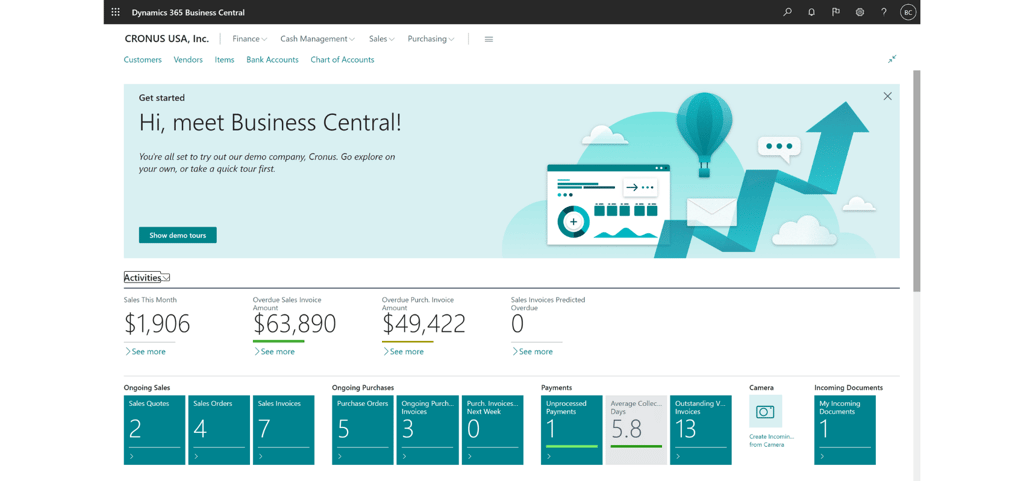
Microsoft Dynamics 365 is a cloud-based and on-premises suite that combines ERP and CRM (Customer Relationship Management) functionality within a single platform. It is designed for small to mid-sized companies and connects finance, sales, service, and operations teams. Its integration with Microsoft 365, Azure, Teams, and Power Platform is a major differentiator, enabling data to flow across the organization without additional middleware.
Training and adoption
Microsoft Learn provides a wide range of training resources for Dynamics 365 at no additional cost, including e-learning modules, instructional videos, certifications, and structured learning paths up to level 300. The platform uses gamification elements such as points and levels to encourage completion. Role-based certifications tailored to specific job functions have been available since 2023.
Limitations
Dynamics 365 is frequently described in user reviews as having an interface that can feel complex and non-intuitive, particularly for first-time ERP users. Additional storage beyond the default allocation incurs extra cost, which adds to licensing and customization expenses.
Reference customers
Coca-Cola, HP, Chevron, Sandvik, L'Oreal
3. SAP SE
SAP SE (Systems, Applications, and Products in Data Processing) is the largest enterprise application software company in Europe and one of the top two ERP vendors globally. The company serves 26 different industries and 12 lines of business across cloud, on-premises, and hybrid deployment models.
SAP S/4HANA
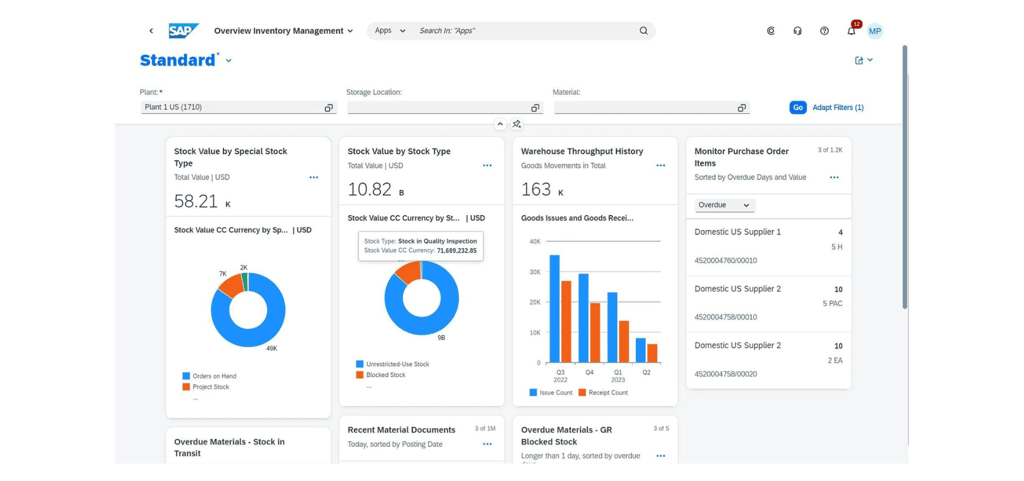
SAP S/4HANA is SAP's intelligent cloud ERP suite, built on the SAP HANA in-memory database. It comes with pre-built industry modules and is suited to both large enterprises and scaling organizations. SAP designed S/4HANA to incorporate advanced technologies including machine learning, artificial intelligence, and the Internet of Things (IoT). It targets procurement, manufacturing, and supply chain-intensive industries in particular.
Training and adoption
SAP offers training through multiple formats including classroom sessions, virtual instructor-led events, and self-paced learning. The SAP Learning Hub Blended Learning Academy provides modular training with a 14-day free trial. Certification and full access to training content require an annual subscription fee.
Limitations
SAP S/4HANA carries high implementation and operating costs, making it less suitable for organizations with straightforward requirements or limited IT budgets. The implementation process is complex and time-consuming. User reviews also highlight the need for expert-level training to use the system effectively.
Reference customers
Accenture, HP, Pfizer, Unilever
4. Infor
Infor is an established enterprise software vendor that successfully completed its transition from legacy on-premises technology to cloud-based ERP. Koch Industries acquired Infor in 2020. Infor is particularly strong in asset-intensive and industrial industries.
Infor M3
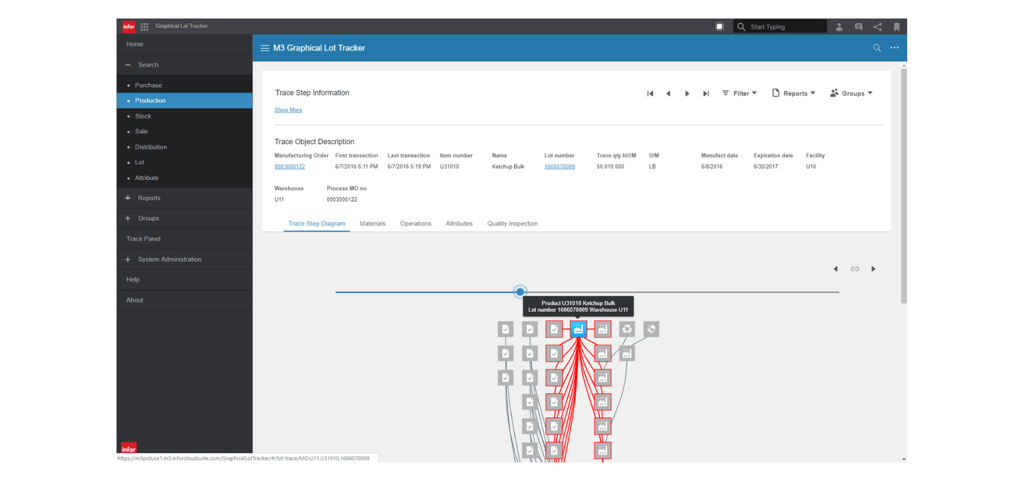
Infor M3 is a cloud-based ERP system purpose-built for global manufacturing and distribution companies. Its core capabilities include global financial visibility, advanced analytics, and integration with external data systems. Infor M3 targets industries including chemical, distribution, equipment, fashion, food and beverage, and industrial manufacturing.
Training and adoption
Infor provides a Campus Plus Membership, an annual subscription that enables organizations to train their entire workforce. The membership includes micro-learning segments designed to support modern learning habits. Infor University (Infor U) serves as the cloud-based learning management platform, with ongoing enhancements to its LMS (Learning Management System) architecture.
Limitations
User reviews raise concerns about a non-intuitive user experience, challenges in training new users, and limited developer documentation for organizations building custom integrations.
Reference customers
Triumph, Burton, Flatiron, Belmond
5. Sage
The Sage Group is a market leader in integrated accounting, payroll, and payment solutions for small and medium-sized enterprises (SMEs). Sage has focused its recent product strategy on cloud-based software and is a more affordable alternative to the larger ERP platforms covered above.
Sage X3
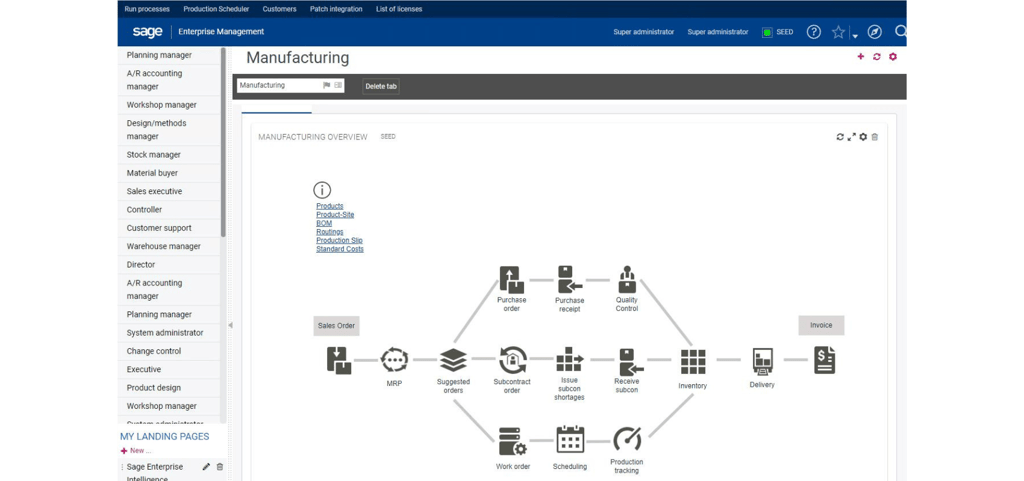
Sage X3 is a versatile ERP solution available as SaaS, cloud-hosted, or on-premises deployment. Its web-based architecture delivers real-time updates regardless of deployment model, and organizations can use their own data centers or rely on Sage's managed hosting services.
Training and adoption
Sage University offers three Sage X3 Learning Membership tiers: Basic, Plus, and Premiere. Each membership grants access to core e-learning content, though none of the tiers include free supplementary learning resources.
Limitations
User reviews flag slow response times from customer support, an absence of a community-driven forum for peer-to-peer issue resolution, and recurring difficulties during initial system configuration.
Reference customers
RIVR Media, BKPlus, Sierra at Tahoe
Beyond the Top 5: Other ERP Vendors Worth Evaluating
The five vendors above dominate global market share, but several other platforms deserve consideration depending on your industry and company size. According to multiple practitioner sources, the broader ERP software list includes the following widely deployed systems.
Vendor
Flagship Product
Best Suited For
Workday
Workday Financial Management
Services and HR-centric organizations
Epicor
Epicor Kinetic
Manufacturing, distribution, retail
Acumatica
Acumatica Cloud ERP
Small to mid-sized businesses
IFS
IFS Cloud
Asset-intensive industries, field service
Odoo
Odoo ERP
SMEs, open-source flexibility
NetSuite (standalone)
NetSuite ERP
Fast-growing mid-market companies
For a broader comparison of ERP systems and platforms, Panorama Consulting's annual ERP vendor rankings provide practitioner-sourced evaluation data across implementation outcomes, total cost of ownership, and user satisfaction.
How to Evaluate ERP Vendors: Key Selection Criteria
Every organization's requirements differ, but the following criteria apply consistently across vendor evaluations.
Deployment model: Determine whether your organization needs a pure cloud ERP, an on-premises solution, or a hybrid deployment before shortlisting vendors.
Industry fit: Some ERP vendors, such as Infor and IFS, are optimized for specific verticals. Others, such as SAP and Oracle, offer broad horizontal coverage with industry templates.
Total cost of ownership: License fees represent only part of the cost. Implementation, customization, training, and ongoing support typically account for a significant share of total spend.
Integration capabilities: Assess how easily the ERP connects to your existing technology stack, including CRM, HR, and supply chain tools.
Scalability: Choose a system that can grow with your organization rather than requiring replacement at the next stage of growth.
User adoption support: All five top vendors provide some training infrastructure, but built-in training alone rarely drives full adoption at scale.
If you are currently moving from a legacy system, the on-premise to SaaS migration process introduces additional change management complexity that vendor training programs typically do not address.
Why ERP User Adoption Remains the Critical Success Factor
Selecting the right ERP vendor is necessary but not sufficient. Across all five top vendors, user reviews consistently identify adoption as the most common source of post-implementation problems. Complex interfaces, insufficient in-context guidance, and training programs delivered before go-live rather than at the moment of need all contribute to low utilization.
"You can run the most interesting project in the world, but if there is no support for users, adoption will be very limited. So you need tools that let people build skills on these new tools easily and intuitively."
This is where a Digital Adoption Platform (DAP) complements any ERP investment. A DAP overlays the ERP interface and delivers step-by-step guidance, contextual help, and automated walkthroughs directly within the application, reducing the gap between training and day-to-day use.
Lemon Learning is a DAP built specifically to support ERP and enterprise software deployments. It integrates with Oracle NetSuite, Microsoft Dynamics 365, SAP S/4HANA, Infor, Sage, and many other platforms. Organizations working with an ERP implementation partner can embed Lemon Learning directly into the deployment project to accelerate time-to-competency for end users.
For teams responsible for managing the people side of an ERP rollout, Lemon Learning's change management support solution provides in-application guidance and real-time usage analytics to identify where users are struggling and intervene before adoption problems compound.
ERP Vendor Comparison: Full System List
Use the interactive table below to explore and compare the full list of ERP systems, including vendors beyond the top five covered in this guide.
FAQ
Frequently asked questions
Which company is a leading ERP vendor?+
SAP and Oracle are widely recognized as the two leading ERP vendors globally. SAP S/4HANA dominates among large enterprises, while Oracle offers both NetSuite for mid-market companies and Oracle Fusion Cloud ERP for large, product-centric organizations. Microsoft Dynamics 365 is also a top-tier vendor, particularly strong in cloud and hybrid deployments.
Which ERP is most widely used?+
SAP is the most widely used ERP system globally, with customers across more than 180 countries. SAP S/4HANA is especially dominant among large enterprises and multinational corporations. Microsoft Dynamics 365 and Oracle NetSuite are among the most widely deployed platforms for mid-market and growing businesses.
Which ERP is most used in the USA?+
Microsoft Dynamics 365, SAP S/4HANA, and Oracle NetSuite are among the most widely used ERP systems in the United States. Infor CloudSuite and Epicor are also commonly deployed across US manufacturing, distribution, and services industries.
Will ERP be replaced by AI?+
ERP systems are not expected to be replaced by AI in the near term. Instead, leading vendors including SAP, Oracle, and Microsoft are embedding AI capabilities directly into their platforms to automate processes, surface insights, and reduce manual data entry. AI is evolving ERP rather than replacing it.