10 IT Trends Every Organization Should Track in 2026
Discover the 10 most important IT trends and digital technology shifts shaping information systems in 2026 and the years ahead. Stay ahead of the curve.
The ten IT trends covered below -- ranging from generative artificial intelligence to sustainable infrastructure -- represent the most significant forces reshaping information technology in 2026 and across the next decade. Understanding them helps IT leaders build an effective IT strategy and prioritize investments that deliver lasting value.
What is driving IT trends in 2026?
IT trends in 2026 are being driven by the convergence of several forces: rapid advances in artificial intelligence, growing cybersecurity threats, the mass adoption of cloud services, and increasing regulatory pressure around data privacy. According to survey data published by the University of Phoenix, the top emerging technologies identified by IT professionals in 2025 were AI, quantum computing, and cloud and edge computing. These forces are not independent; they interact and amplify each other, making it important for organizations to assess them together rather than in isolation.
The sections below cover each of the ten trends in detail, with a focus on what they mean practically for IT departments and business leaders.
1. What role does artificial intelligence play in IT today?
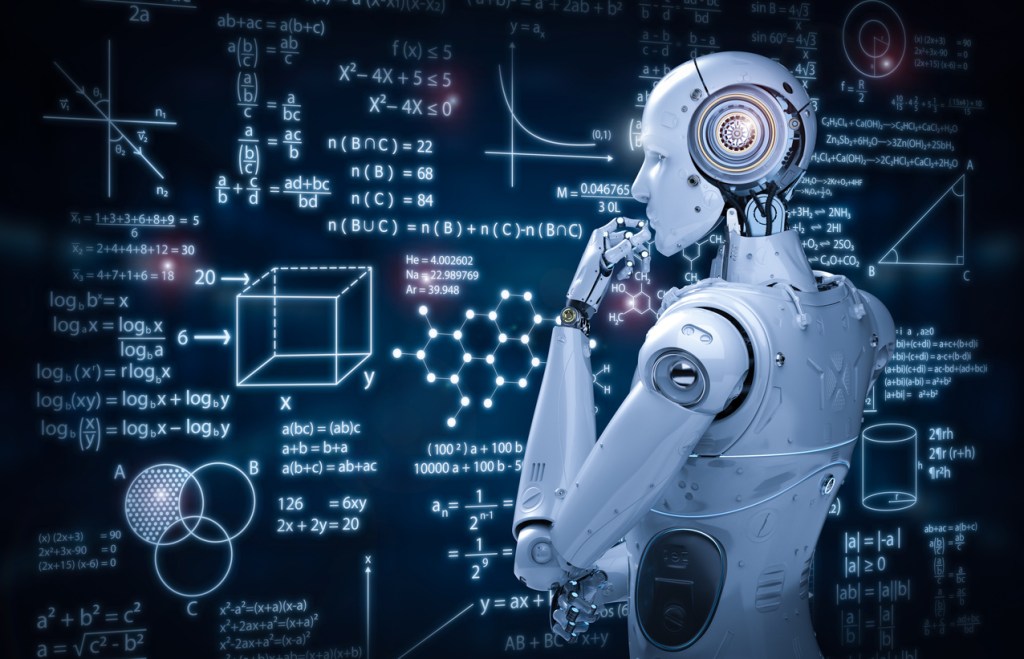
Artificial intelligence (AI) and machine learning are the defining IT trends of this period. AI has moved well beyond research and experimentation: it now powers customer service chatbots, fraud detection systems, predictive maintenance tools, and code generation assistants used by software developers every day.
Generative AI (GenAI) and large language models (LLMs) have added a new dimension. These systems can produce text, images, code, and structured data from natural-language prompts, making them accessible to employees across every department, not just technical teams. The emergence of cloud computing and big data infrastructure made this shift possible by providing the storage and processing power that AI models require.
Machine learning -- the discipline within AI where algorithms improve automatically through exposure to data -- is now central to data management, demand forecasting, and IT operations. IT departments are increasingly using AI-powered observability tools to detect anomalies in systems before they cause outages.
"Our approach was to use generative AI to help employees take ownership of the technology itself. It is so new, so different and so unpredictable in its answers that we have a real interest in everyone knowing how to use it."
For IT teams, the practical implication is that AI literacy across the workforce is now a prerequisite for realizing value from AI investments. Technology alone is not enough without the human capability to use it well.
2. How is cybersecurity evolving as an IT trend?
Cybersecurity remains one of the most urgent IT trends year after year, and the threat landscape continues to grow more complex. Organizations in healthcare, financial services, energy, and the public sector face sophisticated attacks including ransomware, phishing campaigns, and supply chain compromises.
Zero Trust Architecture (ZTA): A security model based on the principle of "never trust, always verify," meaning no user or device is trusted by default, even inside the corporate network.
AI security platforms: Systems that use machine learning to detect anomalous behavior and respond to threats faster than human analysts can.
Post-quantum cryptography: A new generation of encryption standards designed to remain secure against the computational power of future quantum computers. The U.S. National Institute of Standards and Technology (NIST) finalized its first post-quantum cryptography standards in 2024.
Multi-factor authentication (MFA) and passwordless methods: Replacing weak password practices with stronger verification at every access point.
As organizations adopt more connected devices and cloud services, the attack surface grows. Cybersecurity is therefore not just a technical function but a business-wide priority that requires governance, training, and continuous investment.
3. How is the Internet of Things reshaping IT infrastructure?
The Internet of Things (IoT) refers to the network of physical devices -- sensors, machines, vehicles, appliances -- that collect and exchange data over the internet. IoT ecosystems operate largely without direct human interaction: each device gathers data, transmits it to a central system or edge node, and can trigger automated responses.
For IT departments, IoT introduces significant opportunities and challenges. On the opportunity side, connected devices enable real-time monitoring of equipment, supply chains, energy consumption, and patient health. On the challenge side, every connected device is a potential entry point for a cyberattack, and managing thousands of endpoints creates substantial operational complexity.
Key IoT developments to track in 2026 include:
Industrial IoT (IIoT) deployments in manufacturing and logistics
Smart building and energy management systems
Connected healthcare devices and remote patient monitoring
Integration between IoT data streams and AI analytics platforms
The combination of IoT with edge computing (covered below) is particularly important because it allows data to be processed close to the source rather than sent to a distant data center, reducing latency and bandwidth costs.
4. Where do blockchain and smart contracts fit in today's IT landscape?
Blockchain technology provides a distributed, tamper-resistant ledger for recording transactions and agreements. One of its most practical enterprise applications is the smart contract: a self-executing digital agreement encoded on the blockchain that triggers predefined actions automatically when specified conditions are met, without requiring a human intermediary.
Smart contracts are managed by a network of programmed computers and can automate a wide range of processes, including releasing payments when delivery is confirmed, registering asset ownership transfers, or enforcing service-level agreements in procurement. This reduces administrative overhead, limits the potential for disputes, and speeds up transaction cycles.
In 2026, blockchain adoption in enterprise IT is concentrated in financial services, supply chain management, healthcare data exchange, and identity verification. While broader mainstream adoption has been slower than early forecasts suggested, the underlying technology continues to mature and find reliable use cases where trust and auditability are critical.
5. Why do cloud computing and SaaS remain central IT trends?
Cloud computing -- hosting computing resources, storage, and applications over the internet rather than on physical on-premise servers -- is now the default architecture for most organizations. It provides on-demand scalability, reduces capital expenditure, and enables distributed teams to access the same systems from anywhere.
Software as a Service (SaaS) is the delivery model built on top of cloud infrastructure, where applications are hosted and maintained by a vendor and accessed by customers via a web browser or API. The shift from on-premise software to SaaS trends and deployment models has accelerated significantly over the past decade and continues in 2026.
Current cloud trends worth monitoring include:
Cloud trend
What it means in practice
Multi-cloud strategy
Using services from more than one cloud provider to avoid vendor lock-in and optimize cost and performance
Cloud-native development
Building applications using containers and microservices designed to run in cloud environments
FinOps (cloud financial operations)
Managing and optimizing cloud spending across teams using shared accountability
Sovereign cloud
Cloud environments that meet national data residency and regulatory requirements
For IT leaders, the challenge is no longer whether to adopt cloud but how to govern multi-cloud environments effectively, control costs, and ensure security and compliance across all platforms.
6. How are process automation and intelligent automation changing IT operations?
Process automation covers a spectrum of technologies that replace manual, repetitive tasks with software execution. At one end sits Robotic Process Automation (RPA), which uses software robots to mimic human interactions with applications -- filling forms, copying data between systems, generating reports. At the other end sits intelligent automation, which combines RPA with AI to handle unstructured data and make context-dependent decisions.
Hyperautomation, a term popularized by research firm Gartner, extends this further: it is the disciplined, business-driven approach to identifying, vetting, and automating as many processes as possible using a combination of tools including RPA, AI, machine learning, and process mining.
For IT departments, automation delivers measurable benefits: faster processing times, lower error rates, reduced operational costs, and the ability to reallocate skilled staff to higher-value work. Common IT automation use cases in 2026 include:
Automated IT service desk ticket routing and resolution
Infrastructure provisioning and configuration management
Security patch management and compliance monitoring
Data pipeline orchestration for analytics and reporting
The adoption of autonomous AI agents -- software that can plan and execute multi-step tasks independently -- is pushing automation into new territory in 2026, with implications for how IT teams structure workflows and governance.
7. What is edge computing and why does it matter for IT?
Edge computing is an approach to data processing in which computation happens at or near the source of data -- on a factory floor, inside a vehicle, at a retail location -- rather than in a centralized cloud data center. By processing data locally, edge computing reduces latency, lowers bandwidth consumption, and allows systems to function even when connectivity to the central cloud is interrupted.
Edge computing is closely linked to IoT: as the number of connected devices grows, sending all raw sensor data to a central cloud for processing becomes impractical both in terms of network cost and response time. Edge nodes handle initial processing and send only relevant, aggregated data upstream.
A hybrid architecture combining edge computing with centralized cloud services is now common in industries such as manufacturing, autonomous vehicles, telecommunications, and healthcare. IT teams managing these environments need new skills in distributed systems, real-time analytics, and edge security.
8. How are augmented reality and virtual reality maturing as IT trends?
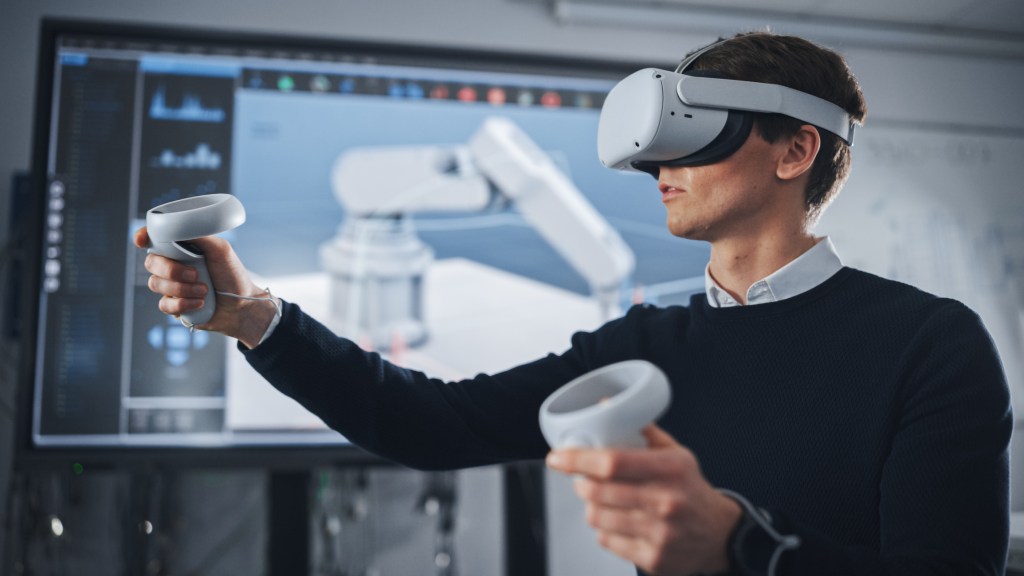
Augmented reality (AR) overlays digital information onto the real physical environment in real time, typically through a smartphone, tablet, or wearable headset. Virtual reality (VR) creates a fully immersive computer-generated environment that replaces the user's physical surroundings. Together, they are often grouped under the term Extended Reality (XR).
In enterprise IT, XR applications are moving from novelty to practical deployment. Current use cases include:
Training and simulation: Immersive VR environments for training technicians, surgeons, or emergency responders without real-world risk
Remote assistance: AR overlays that allow a remote expert to guide an on-site technician through a repair procedure in real time
Digital twins: Virtual replicas of physical assets or environments that allow engineers to model, test, and optimize systems before making physical changes
Workplace collaboration: Virtual meeting spaces that add spatial context to distributed team collaboration
The integration of AR and VR with AI -- for example, AI-powered object recognition that feeds real-time contextual information into an AR display -- is making these technologies significantly more capable and reducing the barriers to enterprise adoption.
9. How is 5G and next-generation connectivity reshaping IT?
Fifth-generation (5G) mobile network technology offers substantially higher data speeds, lower latency, and greater device density than its predecessor. For IT infrastructure, 5G enables new categories of application that were previously impractical: real-time remote control of industrial equipment, high-bandwidth video analytics at the network edge, and reliable wireless connectivity for dense IoT deployments.
5G networks are now operational across major markets, with enterprise private 5G networks -- dedicated cellular networks deployed inside a factory, campus, or warehouse -- becoming an increasingly common infrastructure option for organizations that need reliable, high-performance wireless connectivity without depending on public carrier networks.
Research organizations are already developing sixth-generation (6G) standards, with initial deployments projected for the early 2030s. While still in a research phase, 6G is expected to deliver speeds and latency improvements that would make capabilities such as real-time holographic communication and highly accurate positioning practical at scale.
For IT departments, the near-term priority is integrating 5G into existing network architecture and governance frameworks, ensuring security, and evaluating where high-bandwidth low-latency connectivity can unlock new operational value.
10. How are data management, privacy, and sustainable IT shaping the IT agenda?
Modern organizations generate and depend on vast quantities of data. Effective data management -- the practices, architectures, and tools used to collect, store, govern, and use data -- is now a core IT competency rather than a supporting function. Key frameworks in this space include data mesh (a decentralized approach to data ownership), data fabric (an integrated data management layer across environments), and master data management (MDM), which ensures consistency and accuracy across enterprise data sources.
Data privacy regulation continues to intensify globally. The European Union's General Data Protection Regulation (GDPR) set a template that many other jurisdictions have followed or adapted. IT teams are responsible for ensuring that data collection, processing, and storage practices comply with applicable law -- and that employees understand their obligations. Technical controls such as data encryption, role-based access control, and audit logging are foundational, but governance processes and user training are equally important.
Sustainable IT infrastructure has moved up the agenda as organizations face pressure from regulators, investors, and customers to reduce their environmental impact. Data centers account for a significant portion of global electricity consumption. IT leaders are responding by optimizing server utilization, migrating workloads to more energy-efficient cloud infrastructure, and factoring energy consumption into hardware procurement decisions. Green IT is no longer a voluntary commitment for many organizations: it is becoming a regulatory and reporting requirement.
How can organizations keep pace with these IT trends and digital technology shifts?
Tracking IT trends is valuable only if organizations can translate awareness into capability. The gap between adopting a new technology and seeing employees use it effectively is one of the most consistent barriers IT leaders face. Each wave of technology -- from cloud migrations to AI tool rollouts -- requires not just technical deployment but genuine user adoption.
Lemon Learning is a Digital Adoption Platform (DAP) that addresses this challenge by delivering in-application guidance, interactive walkthroughs, and real-time support directly inside the software tools employees use every day. Rather than asking users to find answers in a separate knowledge base or attend a training session weeks before they need the information, a DAP provides contextual help at the exact moment it is needed.
This approach is especially relevant as IT trends accelerate. When an organization deploys a new SaaS application, adopts AI-powered tools, or migrates to a new cloud platform, the Lemon Learning IT application support solution reduces the time to competence and lowers the volume of support tickets generated by user confusion.
For a practical look at how digital adoption fits into broader IT planning, the guide to digital transformation models offers useful frameworks for structuring technology change initiatives.
Technology continues to develop at pace. The ten trends covered here -- AI and generative AI, cybersecurity, IoT, blockchain, cloud and SaaS, process automation, edge computing, AR and VR, 5G connectivity, and data management and sustainability -- represent the areas where IT investment decisions made today will shape organizational capability for years to come. Staying informed and building the human capability to use new tools effectively are the two things organizations can do to ensure they benefit from every wave of change.
The leading IT trends today include advances in artificial intelligence and generative AI, enhanced cybersecurity, cloud and edge computing, the Internet of Things, process automation, and data privacy management. Analysts at Deloitte and Gartner also highlight autonomous AI agents, post-quantum cryptography, and sustainable IT infrastructure as priorities for 2026.
How will IT trends change over the next 5 to 10 years?+
Over the next five to ten years, IT trends point toward deeper AI integration across all business functions, wider deployment of 5G and eventual 6G connectivity, mainstream adoption of quantum-safe security, and the expansion of edge computing. Organizations will also face growing pressure to make their IT infrastructure more energy-efficient and sustainable.
Why do IT trends matter for business strategy?+
IT trends directly shape how organizations compete, operate, and serve customers. Adopting the right technologies at the right time can reduce costs, improve decision-making, and protect against emerging threats. Ignoring major shifts -- such as AI automation or cybersecurity advances -- leaves companies exposed to competitive disadvantage and operational risk.
How can companies help employees keep up with rapid IT changes?+
Companies can support employees through structured digital adoption programs, in-app guidance, and continuous learning initiatives. Digital adoption platforms deliver contextual help directly inside software tools, reducing the learning curve each time a new technology is introduced and ensuring that IT investments translate into real productivity gains.