5 Learning Models Every Educator and Trainer Should Know
What is a learning model? Explore 5 key educational models—Behaviorist, Cognitive, Constructivist, Connectivist, and Humanist—with real training examples
A learning model is a structured framework that describes how people acquire, process, and retain knowledge. There are five widely recognized educational models: the Behaviorist, Cognitive, Constructivist, Connectivist, and Humanist models. Each offers a distinct lens on the learning process, and together they give educators and workplace trainers a toolkit for designing more effective learning experiences. Lemon Learning explores each model below, with practical examples and guidance on applying them in corporate training.
What Is a Learning Model?
A learning model is a theoretical framework that explains the mechanisms behind human learning. Educational models help teachers, instructional designers, and Learning and Development (L&D) professionals understand why learners behave the way they do, and how to structure instruction to match those behaviors. A simple model of learning distills complex psychological theory into actionable principles. The five models covered in this article are the most influential in both academic education and workplace training contexts.
1. Behaviorist Model
The Behaviorist learning model focuses on observable behavior and the role of the environment in shaping it. It is one of the most widely applied educational models in structured training settings.
Definition of Behaviorism
Behaviorism holds that learning is a change in observable behavior caused by external stimuli, and that environmental factors have more influence on outcomes than innate characteristics. Because lifestyle and organizational environment shape responses, trainers can deliberately structure those environments to produce desired behaviors.
A practical workplace example: an employee who receives recognition after closing a major contract is more likely to repeat the behaviors that led to that outcome. This is positive reinforcement, a cornerstone of behaviorism introduced by B.F. Skinner through his theory of Operant Conditioning.
How to integrate this model into corporate training
Use guided practice, spaced repetition drills, and positive reinforcement to shape desired behaviors. Behaviorist techniques work well in compliance training, onboarding checklists, and any scenario where a specific procedural response is the goal.
The Cognitive learning model, also called Cognitivism, shifted focus from observable behavior to the internal mental processes that drive learning. It emerged as a major educational theory in the 1950s alongside early developments in computing and information science.
Definition of Cognitivism
Cognitivism treats learners as information processors. Knowledge is understood as a schema, a mental structure that organizes information. Learning, in this view, means updating or expanding those schemas. Cognitivists argue that the internal processes of the mind, including working memory, long-term memory, and retrieval, must be understood to design effective instruction.
Unlike behaviorism, which treats the mind as a "black box," cognitivism opens that box and examines what happens inside.
How to adopt this model in training
Design training materials that connect new information to what employees already know. Use schema theory to structure onboarding content logically, building from familiar concepts to new ones. Chunking information, using worked examples, and providing retrieval practice all draw directly from cognitive science.
The Constructivist learning model is built on a core principle: learners actively construct their own understanding by connecting new experiences to prior knowledge. This is the educational model most closely aligned with Learning by Doing.
Definition of Learning by Doing
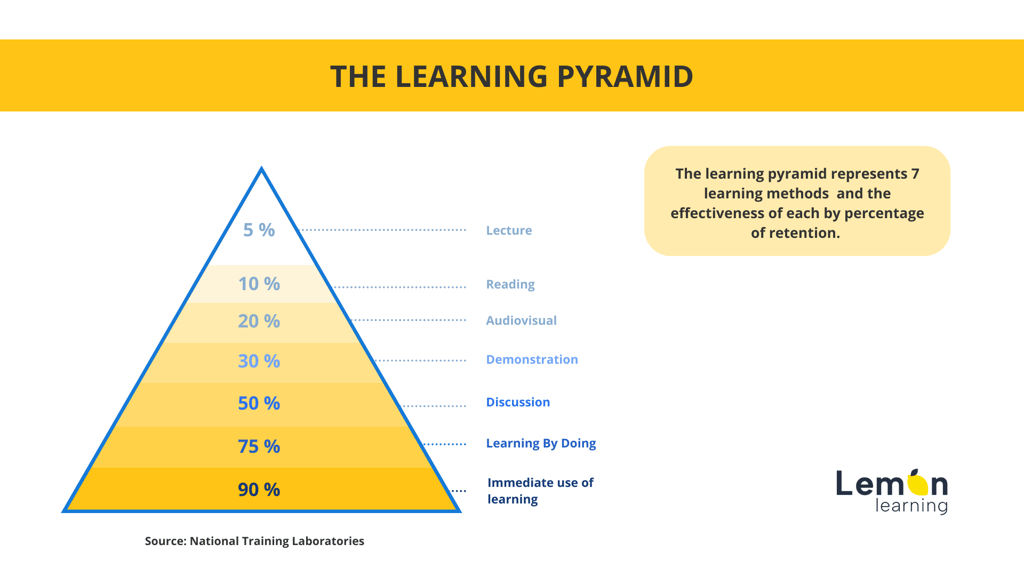
Learning by Doing is a constructivist approach in which learners are directly engaged in activities, not just passive recipients of information. Employees learn by practicing real tasks, which promotes long-term retention and builds genuine competence. The method relies on two fundamental elements: repetition, which reinforces a new skill, and imitation, which helps learners adopt new processes by observing and replicating successful behaviors.
Consider someone learning a new enterprise software tool. A passive approach involves watching a video. A constructivist approach means working inside the application from day one, guided by contextual prompts, so that knowledge is built through direct experience.
The advantages of Learning by Doing include stronger information retention, greater employee autonomy, reduced support costs, and faster adaptation to organizational change.
How to integrate constructivist learning into training
Learning by Doing is particularly effective in change management and software adoption programs. Contextual, in-application guidance allows employees to learn while performing real work tasks rather than in a separate classroom session. For more on real-world implementation, see how organizations have approached integrating the Learning by Doing approach across industries.
The Connectivist learning model is the most recent of the five educational models. It was developed in the early 2000s to account for the profound impact of digital networks on how people learn.
Definition of Connectivism
Connectivism, proposed by George Siemens and Stephen Downes, argues that learning is no longer a purely individual process. In a networked world, knowledge resides across people, databases, and digital tools. Learning means knowing how to find, evaluate, and connect information from across those sources. Technologies such as websites, social media platforms, discussion forums, and collaborative tools extend the reach of any individual learner.
How to integrate connectivism into training programs
Encourage employees to participate in online communities of practice relevant to their roles. Use internal knowledge-sharing platforms, wikis, and social learning features within a Learning Management System (LMS) to create connected learning environments. Guide employees toward curated online resources and prompt them to share findings with their teams.
Theory
Key concept
Training application
Siemens and Downes' Connectivism
Learning through networks and digital tools
Internal wikis, peer knowledge-sharing, LMS social features
5. Humanist Model
The Humanist learning model places the whole person at the center of education. It draws on the work of psychologists Carl Rogers and Abraham Maslow, and it is the educational model most concerned with individual motivation, autonomy, and self-actualization.
Definition of Humanist Theory
Humanism addresses all dimensions of the learner: cognitive, emotional, social, and psychological. According to this model, learning flourishes when individuals feel respected, safe, and motivated by personal meaning rather than external pressure alone. Carl Rogers' Person-Centered Learning approach emphasizes the educator's role as a facilitator rather than an authority figure. Abraham Maslow's Hierarchy of Needs provides a framework for understanding what conditions must be met before higher-order learning can occur.
How to integrate a humanist approach into corporate training
Build personalized learning pathways that connect training to each employee's professional and personal development goals. Foster psychological safety within teams so that employees feel comfortable asking questions and making mistakes. Recognize individuals as whole people, not just performance metrics. Team-building activities, mentoring programs, and regular one-to-one conversations all support humanist learning principles in a workplace setting.
Theory
Key concept
Training application
Rogers' Person-Centered Learning
Learner autonomy and psychological safety
Personalized development plans, mentoring, feedback cultures
Maslow's Hierarchy of Needs
Foundational needs must be met before growth learning
Wellbeing programs linked to professional development
Comparing the 5 Educational Models
Each educational model serves a different purpose. The table below summarizes the five models side by side to help trainers and L&D professionals choose the right approach for their context.
Learning model
Core principle
Learner's role
Best used for
Behaviorist
Environment shapes behavior through stimuli and response
Passive recipient of structured inputs
Compliance training, procedural skills
Cognitive
Learning is internal mental processing and schema-building
Among these five models, the Constructivist approach and its Learning by Doing methodology have the most direct application to modern workplace training, particularly in software adoption and digital transformation programs. By embedding learning inside the tools employees use every day, organizations can reduce time-to-competency and improve retention. Lemon Learning's learning and development solutions are built on this principle, delivering contextual, in-application guidance that turns daily work into a continuous learning experience.
FAQ
Frequently asked questions
What is the 5 learning model?+
The five main learning models are the Behaviorist model, the Cognitive model, the Constructivist model, the Connectivist model, and the Humanist model. Each describes a different theory of how people acquire, process, and retain knowledge.
What are the 5 types of learning?+
The five types of learning commonly referenced in educational theory are behavioral learning (learning through stimulus and response), cognitive learning (learning through mental processing), constructivist learning (learning by building on prior knowledge and experience), connectivist learning (learning through digital networks), and humanist learning (learning centered on personal growth and autonomy).
What is the 5 part learning model?+
A 5 part learning model typically refers to a structured framework that divides the learning process into five distinct phases or components. A well-known example is the 5E Instructional Model (Engage, Explore, Explain, Elaborate, Evaluate), which provides a sequenced approach to instruction widely used in science education.
What are examples of learning models?+
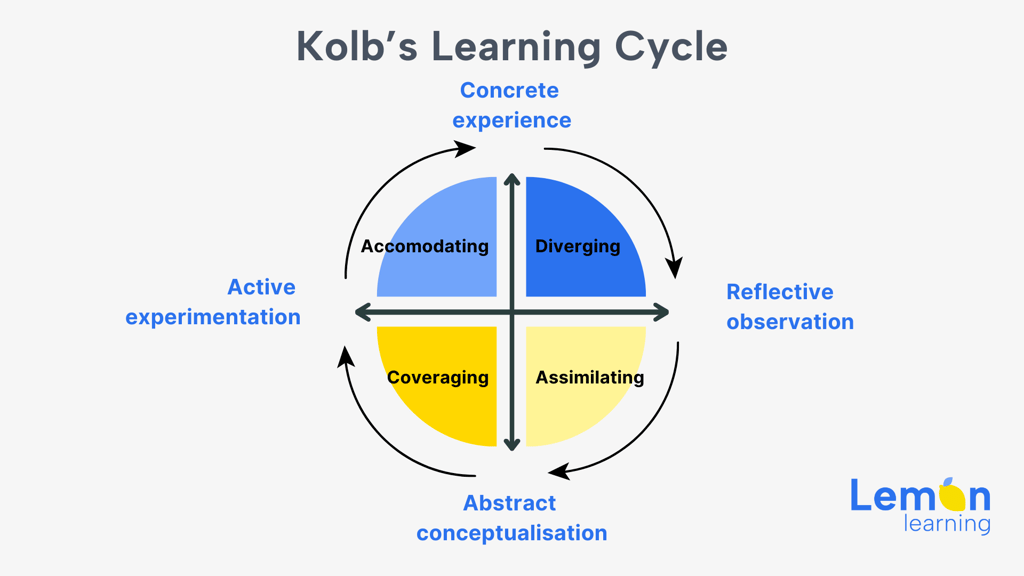
Examples of learning models include Behaviorism (B.F. Skinner's Operant Conditioning), Cognitivism (Information Processing Model), Constructivism (Kolb's Experiential Learning Cycle), Connectivism (Siemens and Downes' network-based learning theory), and Humanism (Maslow's Hierarchy of Needs and Rogers' Person-Centered Learning). Each model guides how educators and trainers design learning experiences.