6 Steps to Execute an Instructional Design Project That Delivers Results
Learn the 6 key steps of an instructional design project — from needs analysis to continuous optimization — and build training programs that deliver real results.
An instructional design project succeeds when it follows a repeatable, structured process: analyze learner needs, design the curriculum, develop materials, implement the program, evaluate outcomes, and optimize continuously. These six steps apply whether you are building a single onboarding module or a company-wide learning initiative. The sections below explain each step in detail, with practical guidance drawn from established instructional design practice.
Instructional design focuses on creating training content tailored to the needs and expectations of learners, the available resources, and the trainer's profile. Executing such a project requires balancing technical, economic, and organizational factors, and it is especially important when developing employee skills as part of a program supervised by a training manager. The complete guide to instructional design provides broader context if you are new to the discipline.
What Is the First Stage in the Instructional Design Process?
The first stage is the preliminary needs analysis. Before any content is created, the instructional designer must understand what learning problem actually needs to be solved.
1. Preliminary Needs Analysis
A thorough needs analysis examines the goals of company leadership, the expectations of employees, and current labor-market and professional development trends. Identifying skills gaps at this stage allows the designer to determine which methods will close them most effectively. Surveys conducted among the target audience help reconcile expressed learner needs with organizational objectives.
Where necessary, the instructional designer may redefine the training goals entirely or propose alternative approaches that better fit the project's constraints. This stage sets the direction for every subsequent decision.
What Are the Steps of the Instructional Design Process?
Once the analysis is complete, the project moves through five further stages: design, development, implementation, evaluation, and optimization. Each stage depends on the outputs of the one before it.
2. Designing the Training Program
The design stage translates the needs analysis into a structured training plan. The designer defines the learning objectives based on the company's desired outcomes, selects appropriate instructional methods, and chooses content and delivery formats, such as online training, in-person sessions, or blended learning.
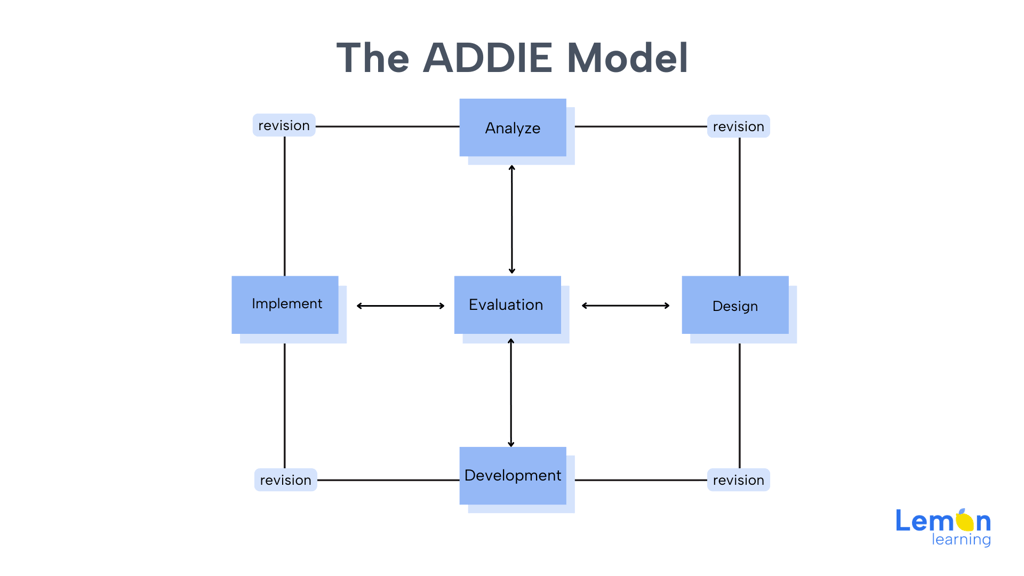
A detailed training plan covers topics, modules, sequencing, and interaction types. Frameworks such as ADDIE (Analysis, Design, Development, Implementation, Evaluation), one of the most widely recognized instructional design models, provide a useful structure for this phase. By anchoring design decisions to the project's objectives, the designer ensures the program will be both impactful and practical.
3. Developing Instructional Materials
Content development turns the design plan into actual learning resources. The choice of materials depends on learner preferences, the format of the training (online or in-person), and budget constraints. Typical outputs include videos, e-learning modules, infographics, educational games, and interactive activities.
Designers also build in self-paced exercises and opportunities for group interaction to maintain engagement. The guiding principle at this stage is that materials must be both interactive and directly relevant to the skills learners need to acquire.
4. Implementation of the Training Program
Implementation is where the instructional plan moves from design into delivery. The specifics vary by format:
Format
Key implementation tasks
Online training
Distribute digital resources via a learning management system (LMS); configure access and tracking
In-person training
Book rooms, prepare printed materials, arrange equipment
Blended learning
Coordinate the online and face-to-face components; brief trainers on both environments
Regardless of format, preparing trainers by familiarizing them with the tools and materials is essential for smooth delivery. Logistics and instructional elements must be coordinated in advance to avoid disruption on the day.
"You can run the most interesting project in the world, but if there is no support for users, adoption will be very limited. So you need tools that let people build skills on these new tools easily and intuitively."
5. Evaluating the Training Effectiveness
Evaluation confirms whether the program met its goals and identifies where it fell short. A thorough evaluation covers three levels:
Participant feedback on the training experience and content quality.
Measurement of skills acquired and their impact on day-to-day workplace performance.
Return on investment (ROI), comparing training costs against the added value generated for the organization.
The evaluation process should also review trainer performance to determine whether content was communicated effectively. Metrics such as goal alignment, budget adherence, and participant satisfaction provide a clear picture of where the program succeeded and where adjustments are needed.
6. Continuous Optimization
No instructional design project should remain static. Industry trends, organizational priorities, and learner profiles all change over time, and the training program must evolve with them. Regular follow-up sessions after delivery give participants a structured channel to share successes, challenges, and outcomes.
Through this feedback loop, instructional designers can:
Refine training materials and update instructional methods.
Document lessons learned to inform future project planning.
Constructive recommendations from participants are among the most valuable inputs available at this stage. Iterating on real-world data is what separates a one-time training event from a genuinely effective learning program.
What Role Do Instructional Designers Play in Corporate Training?
Instructional designers are central to the quality and long-term effectiveness of corporate training programs. They create tailored learning solutions, keep pace with emerging educational tools and delivery methods, and adapt content to match the evolving profiles of modern learners. Their work spans project management, content strategy, and performance measurement, making them a critical bridge between organizational goals and employee development.
Lemon Learning's learning and development solution supports instructional designers and training managers at each of these six stages, helping teams build, deploy, and continuously improve programs that drive measurable employee growth.
Following these six steps consistently gives any organization a repeatable framework for instructional design projects that deliver lasting impact, from the initial needs analysis through to ongoing optimization.
FAQ
Frequently asked questions
What are the 6 basic steps of instruction?+
The six basic steps of instruction are: (1) preliminary needs analysis, (2) designing the training program, (3) developing instructional materials, (4) implementing the training program, (5) evaluating training effectiveness, and (6) continuous optimization. Together, these steps guide an instructional designer from identifying learning gaps through to refining the program over time.
What are the steps in the instructional design process?+
The instructional design process typically follows a structured sequence: analyze learner needs and organizational goals, design the curriculum and learning objectives, develop the actual training materials, implement the program across the chosen delivery format, evaluate outcomes against defined metrics, and optimize based on feedback. Frameworks such as ADDIE (Analysis, Design, Development, Implementation, Evaluation) formalize a similar sequence.
What are the six key stages of an instructional design process?+
The six key stages are needs analysis, program design, content development, implementation, evaluation, and continuous optimization. Each stage builds on the previous one: needs analysis sets learning goals, design defines the strategy, development creates the materials, implementation delivers the training, evaluation measures impact, and optimization closes the loop for future iterations.
What is the first stage in the instructional design process?+
The first stage is the preliminary needs analysis. During this stage, the instructional designer identifies skills gaps, aligns organizational goals with learner needs, reviews labor-market trends, and surveys the target audience. This foundation determines whether training is the right solution and what form it should take before any design work begins.
Discover the 5 best SOP formats with real examples, a comparison table, and guidance on choosing the right standard operating procedure type for your...